While “re-shoring” has become a hot topic, few manufacturers have done as much to make it a reality as David Nieper, a mid-sized clothing manufacturer based in the Midlands. The number of garment manufacturing jobs in the UK has fallen by 90 percent since 1980, pushing the country far down the world league table of textiles producers. [This article initially appeared in 2020.]
Undeterred, David Nieper is investing in local manufacturing, backed up by initiatives in technology, training, design and environmentally sustainable production. A new £4.5m fabric printing unit at the company’s HQ gives it a “massive opportunity to be more flexible and less wasteful” says Christopher Nieper, managing director.
Committed to encouraging more young people to consider careers in textiles, Nieper’s business has built links with local primary schools. It welcomes children to its main factory in Alfreton, Derbyshire, where they can learn about the rudiments of the industry (see the photo above).
The company has set up its own training centre and has taken over the running of a local secondary school, while it has also become a standard bearer for “green” manufacturing through new processes and more sustainable energy sources.
According to a report by ecological experts at Nottingham University, which the family-owned David Nieper commissioned, emissions of carbon dioxide and other greenhouse gases from the company’s domestic production processes are 40-60 percent lower than if the same clothes had been made in countries such as China, Bangladesh or Turkey.
“Consumers are much more aware today of the environmental cost of fashion, and with Brexit too, now is the time to re-shore production,” says Christopher Nieper, pictured below. He adds that David Nieper has become “more agile and more profitable by staying and investing in the UK”.
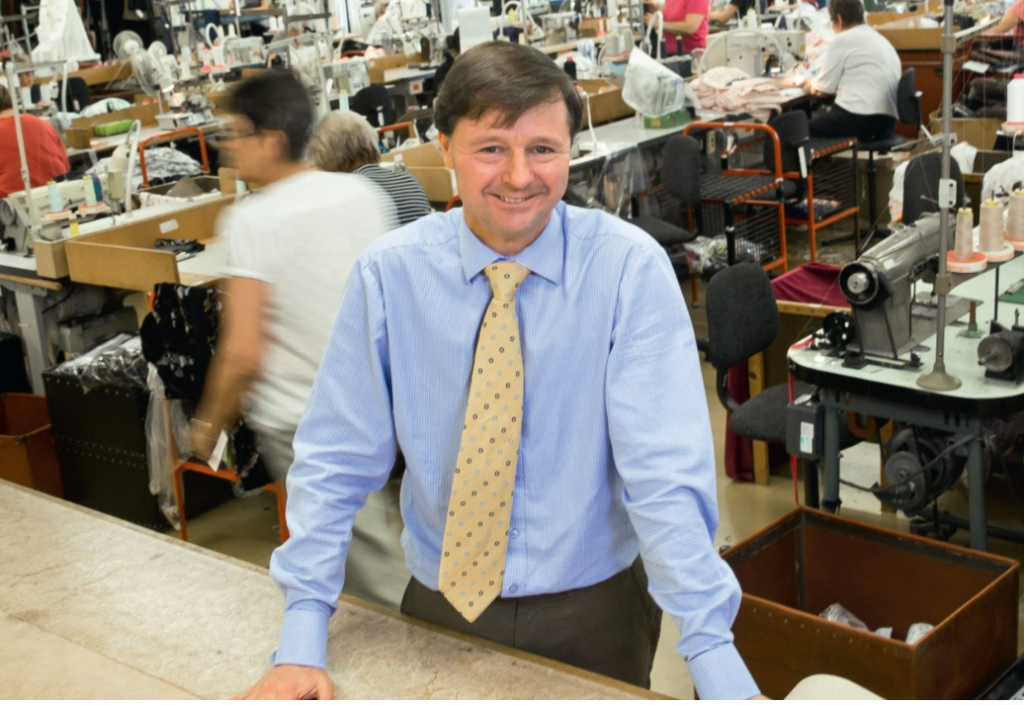
David Nieper is among a handful of companies that have chosen to buck the trend that says the best way to sell clothing in developed markets is to import from plants in cheaper regions such as Asia.
Others include Burberry, the fashion brand with its main UK plant in Yorkshire; Derbyshire-based John Smedley; Johnstons of Elgin, which runs two factories in Scotland; and Fashion-Enter which is in London.
In the past decade David Nieper has spent about £8m on new production units at its Alfreton HQ where the company was founded in 1961 by Christopher Nieper’s father, David. Its annual sales are running at about £18m and it employs just over 300 people. Other photos here were shot in its main plant.
The newest investment is a £4.5m fabric printing unit, opened in autumn 2019. This gives the business increased flexibility to introduce new designs in its market – premium women’s clothing – and respond faster to changes in demand.
As part of a commitment to education and skills David Nieper has over five years trained in its apprentice centre 85 mainly young people – most of them have stayed with the company.
The company has admirers both locally and further afield. Councillor Steve Marshall-Clarke, a member of Derbyshire county council and who lives in Alfreton, credits it with “bucking the trend in UK manufacturing”. He says it “adds up to a significant local force in jobs and training”.
Lise Edwards-Warrener, head of UK manufacturing at Burberry, says David Nieper has done a “superb job”. Kate Hills, founder of the textiles trade group Make it British says: “David Nieper is a fantastic example of how garment making in the UK is viable and sustainable and Christopher is a visionary of the industry.”
As well as its original sewing factory, David Nieper has units for knitting, document printing (creating 10m catalogues a year) and fabric cutting. Its new unit creates printed fabrics for garments such as dresses and swimwear.
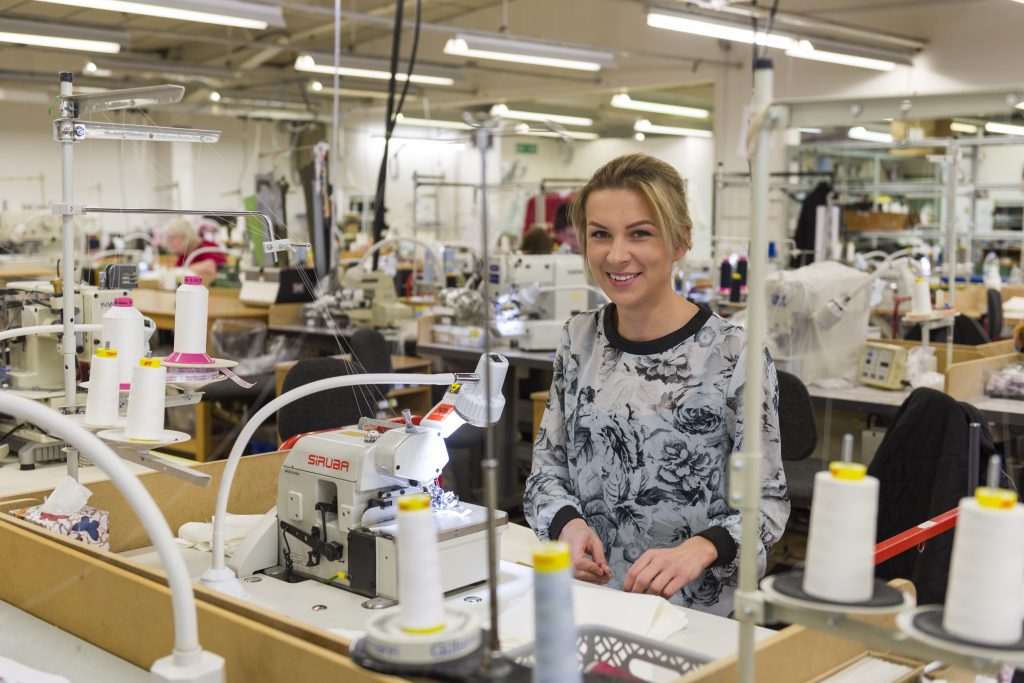
Christopher Nieper says: “Sadly, most of the textile ecosystem in Britain has disappeared, so we’ve brought much of our supply chain in-house. There is so much waste and inefficiency in supply chains. [In contrast] when it’s all under one roof we make the right quantity of the right components at the right time.”
The fabric printing unit illustrates this. “In the past if we wanted to create a new fabric print for a dress, we might have to order our supplier’s minimum run of, say 500 metres and then wait several weeks for the order to arrive,” Nieper says.
“With the in-house plant we can print the exact quantity we need and without waiting. The new factory gives us a massive opportunity to make ourselves more flexible and less wasteful. We can increase the number of prints we offer, without the risk of left-over stock.”
Throughout the business the emphasis is on keeping lead times as short as possible to enable the company to react quickly to changes in the market. As part of this process, David Nieper stopped selling via retailers several years ago, instead selling direct to consumers online or via catalogues. “Being closer to the end customer brings multiple benefits, [including] better informed designs, greater customer loyalty and higher margins,” Nieper says.
The company runs its own apprentice centre, training mainly young people in sewing – a traditional UK strength where skills are now in short supply. Of the 85 who have been through the centre since it opened five years ago, nearly all are still with the company.
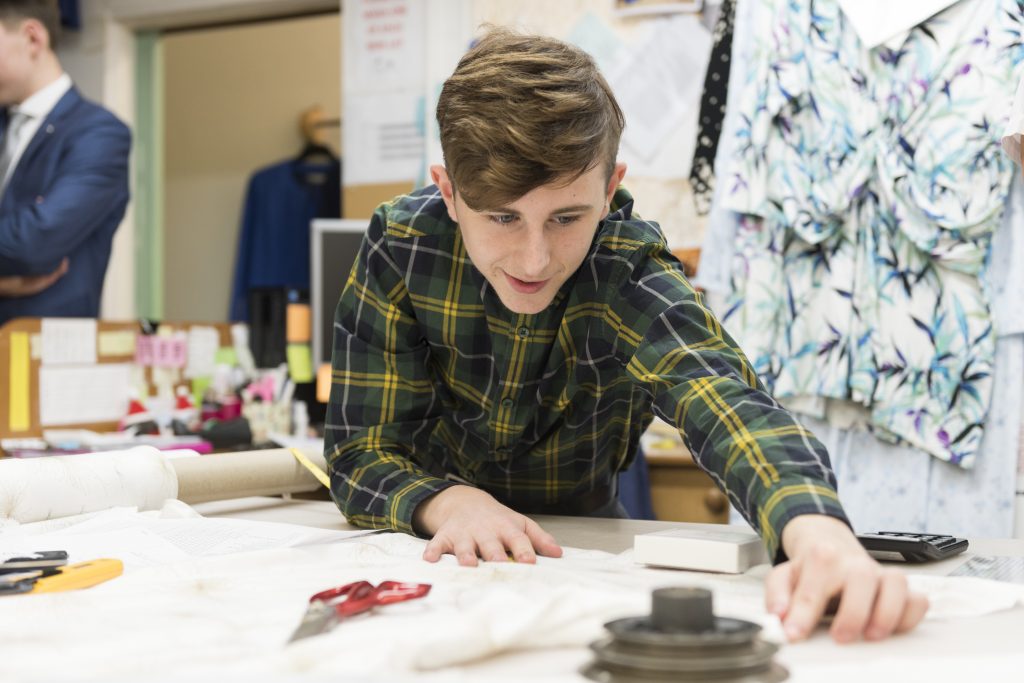
Faced with a severely diminished textiles supply chain in the UK, the company has sought to replace it with in-house production.
“The average age of our staff is over 50 and [many] will retire soon,” says Nieper. “As the [clothing] sector has largely disappeared from Britain’s shores, so have the skills. So, we either have to go offshore ourselves, or start all over again with young people. If we want to ensure there is a future for British textile production, we need to recruit and train and step up efforts to enthuse young people.”
The initiative over the local school – now named the David Nieper Academy – is not directly related to textiles but based on giving children “a rounded education in all subjects so they are equipped for any career route of their choice”, Nieper says. The school is run by an educational trust.
Nieper hopes that at least some of those leaving the school will end up working at his company – or in other local manufacturing businesses. “There is a view that young people don’t aspire to work in manufacturing, [but] this isn’t strictly true. It’s all about people and knowledge of careers. We offer young people [from schools in the region] the opportunity to visit our operations and we hope that at least some will think we could be a good place to work.”
Cutting a dash – the Midlands clothes maker aims its garments at an upmarket niche in women’s fashion.
In other education activity, David Nieper organises events at nearby primary schools, aimed at introducing young children to concepts of design and production. For instance, the company runs an annual “fashion for free” competition in which children create clothes using recycled materials they find around their home or school.
The company also works with the University of Derby and Chesterfield College, nearby educational establishments, to support fashion and textiles students.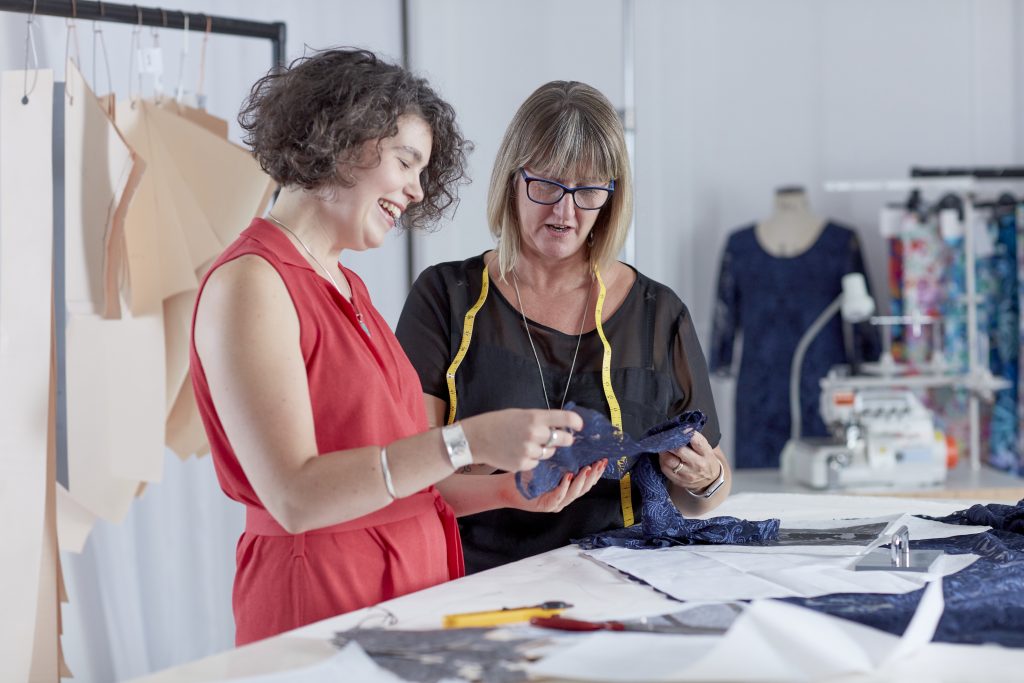
On the issue of sustainability, while the Nottingham report scores David Nieper’s processes highly in terms of energy use, it also points out that garment production accounts for only a small proportion of the overall “carbon footprint” of most items of clothing. Much bigger percentages come from the manufacture of the materials used in the garments, including yarn and fabric, with these operations mainly happening far from the UK, in places over which David Nieper and other materials purchasers have little control.
Nieper says the study’s findings are a reminder of how far the company still has to go with its sustainability efforts. This has spurred it to organise new projects including increasing its use of solar energy and heat recovery units and moving to more energy-efficient production processes. The company’s ambition in the next few years, says Christopher Nieper, is to become a prime “exemplar of eco-friendly production”.
The article was published in Made Here Now on February 10 2020.


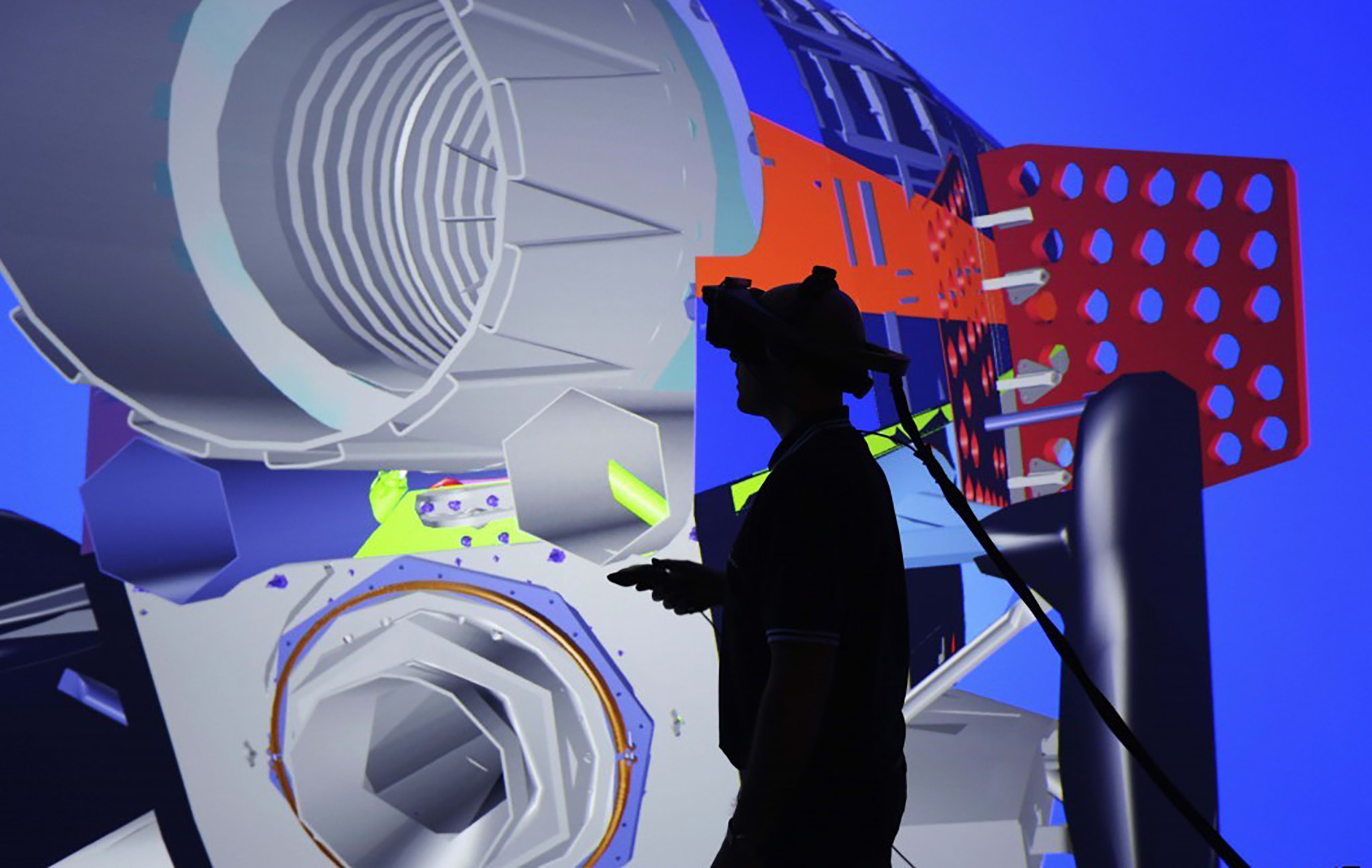 Modern production can encompass new ideas in virtual reality, as illustrated by work at the High Value Manufacturing Catapult in designing components for nuclear power stations
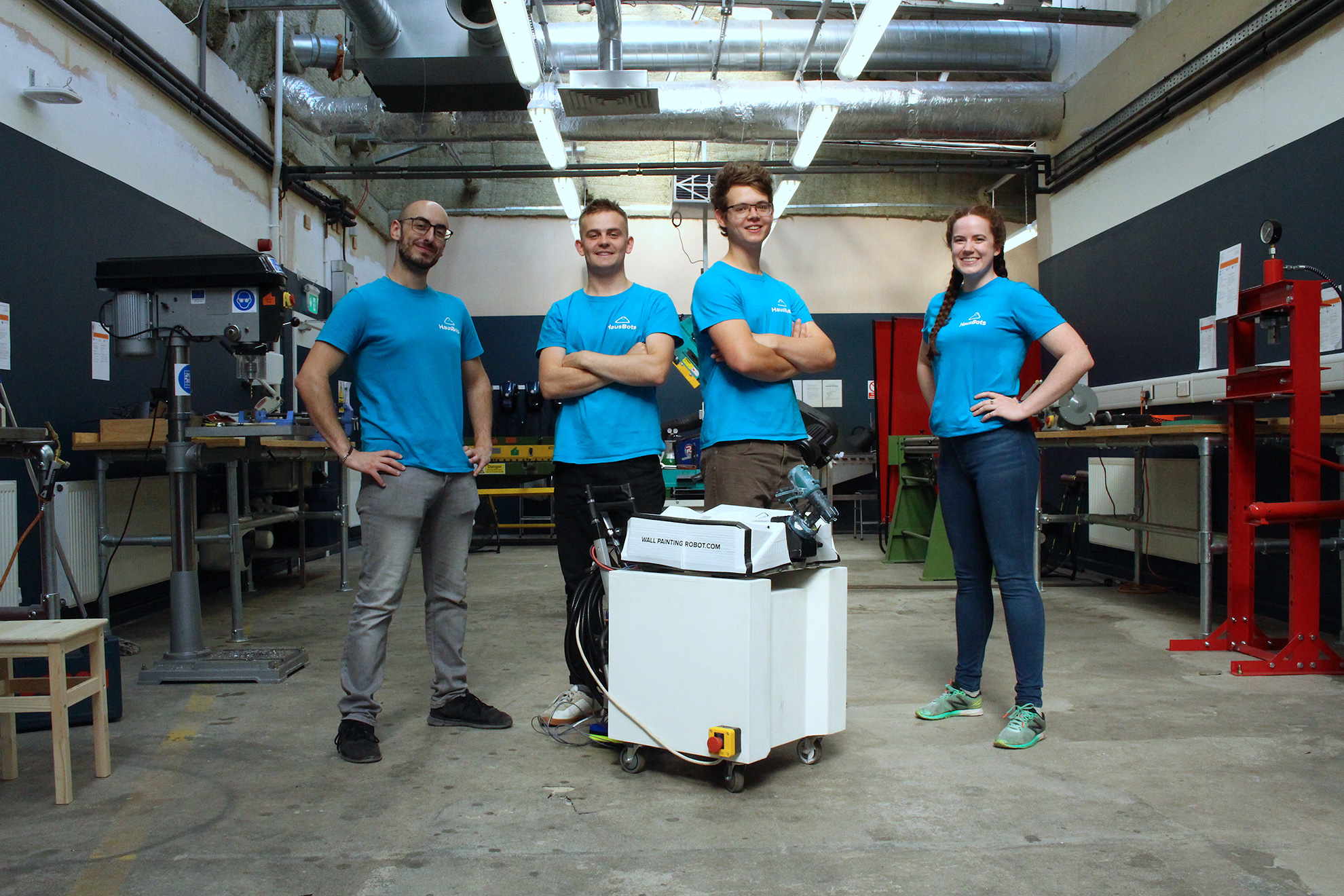 Role models – the youthful engineering team at Birmingham robot builder Hausbots. Left to right: Mike Skitsas, Jack Cornes, Harry Smith and Jenna Luchak
 The new electronic chips promise to make possible “augmented reality” spectacles which display useful information as well as views of the outside word. The picture shows what someone might see when at an airport.
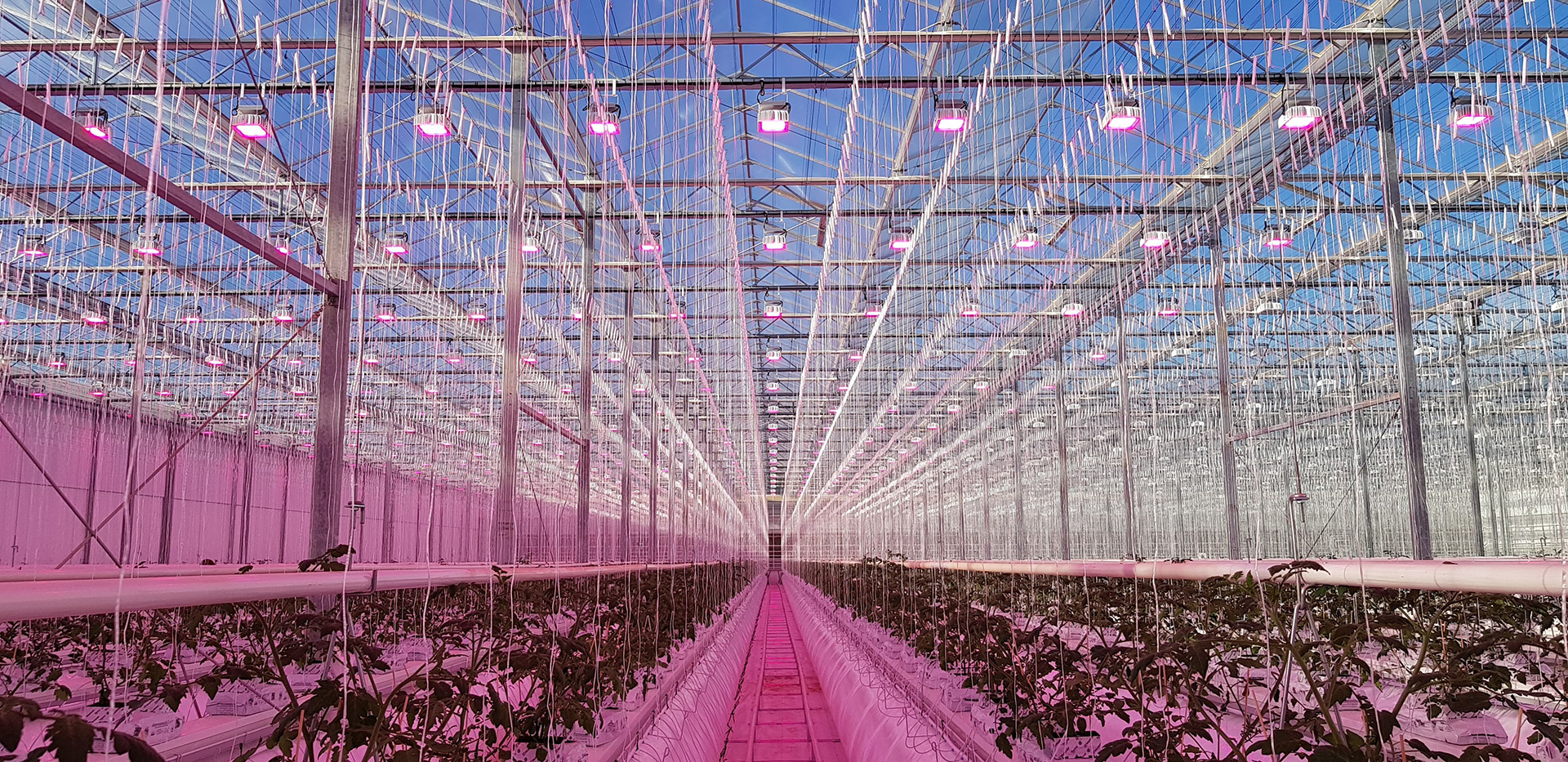 As part of Plessey’s business it makes light sources to help accelerate plant and crop growth in indoor farms
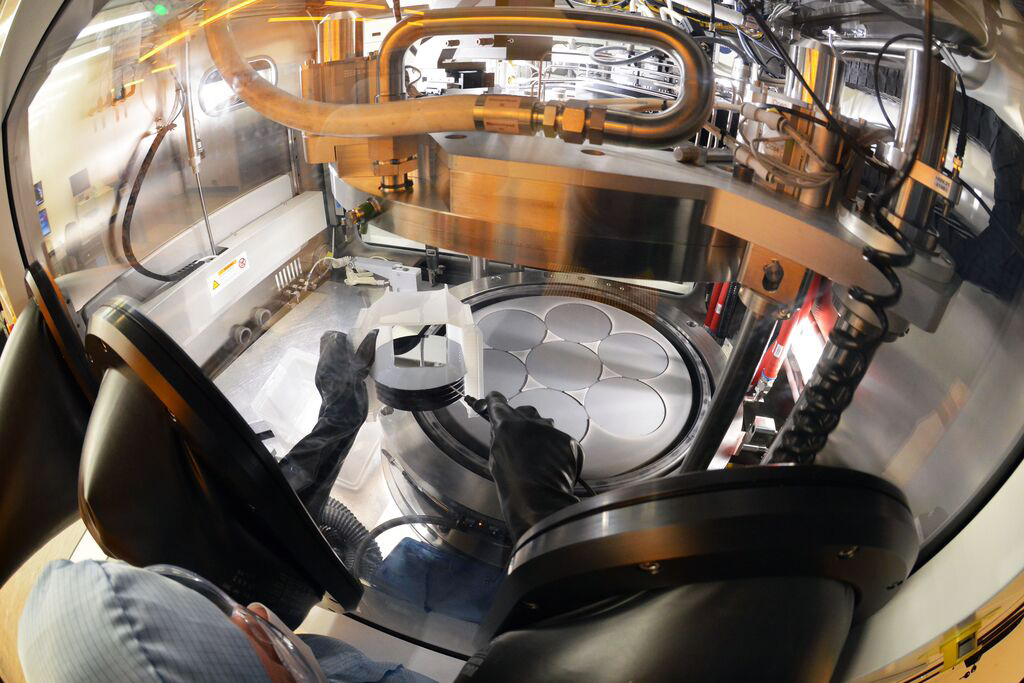 The company has invested heavily in equipment for making minuscule semiconductor-based light sources
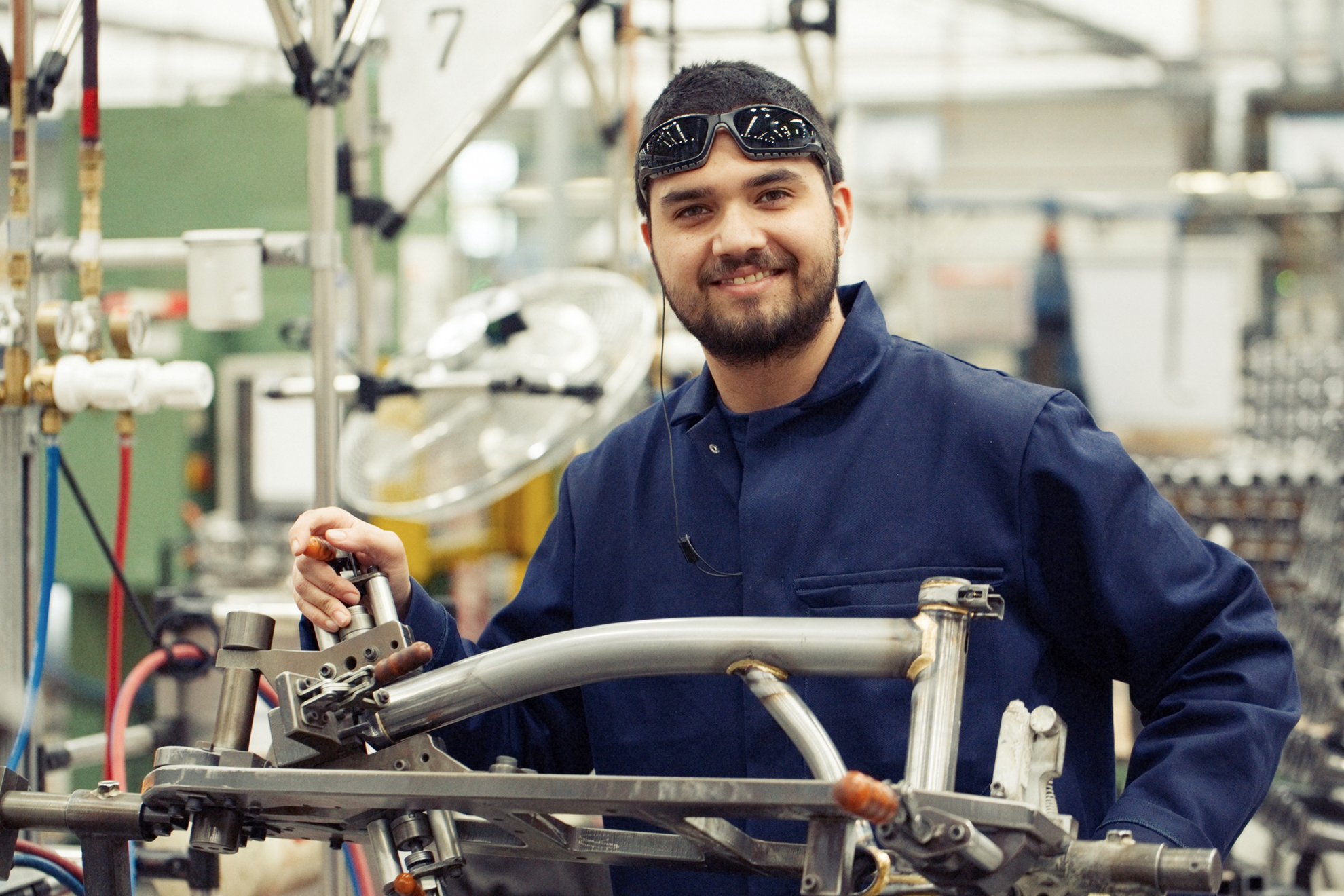 The bike maker’s London plant can make 100,000 bikes a year – but could run out of space in the 2020s.
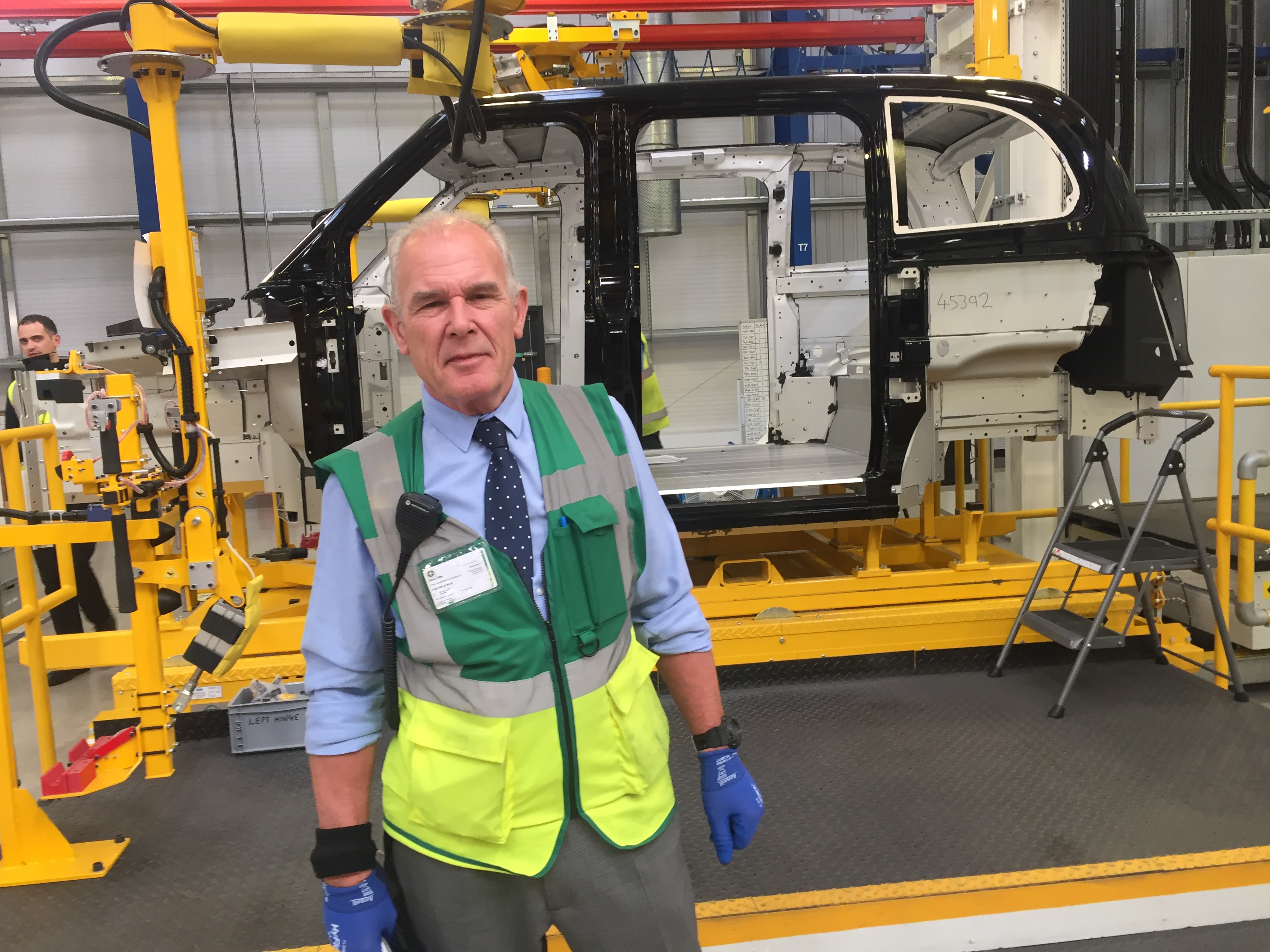
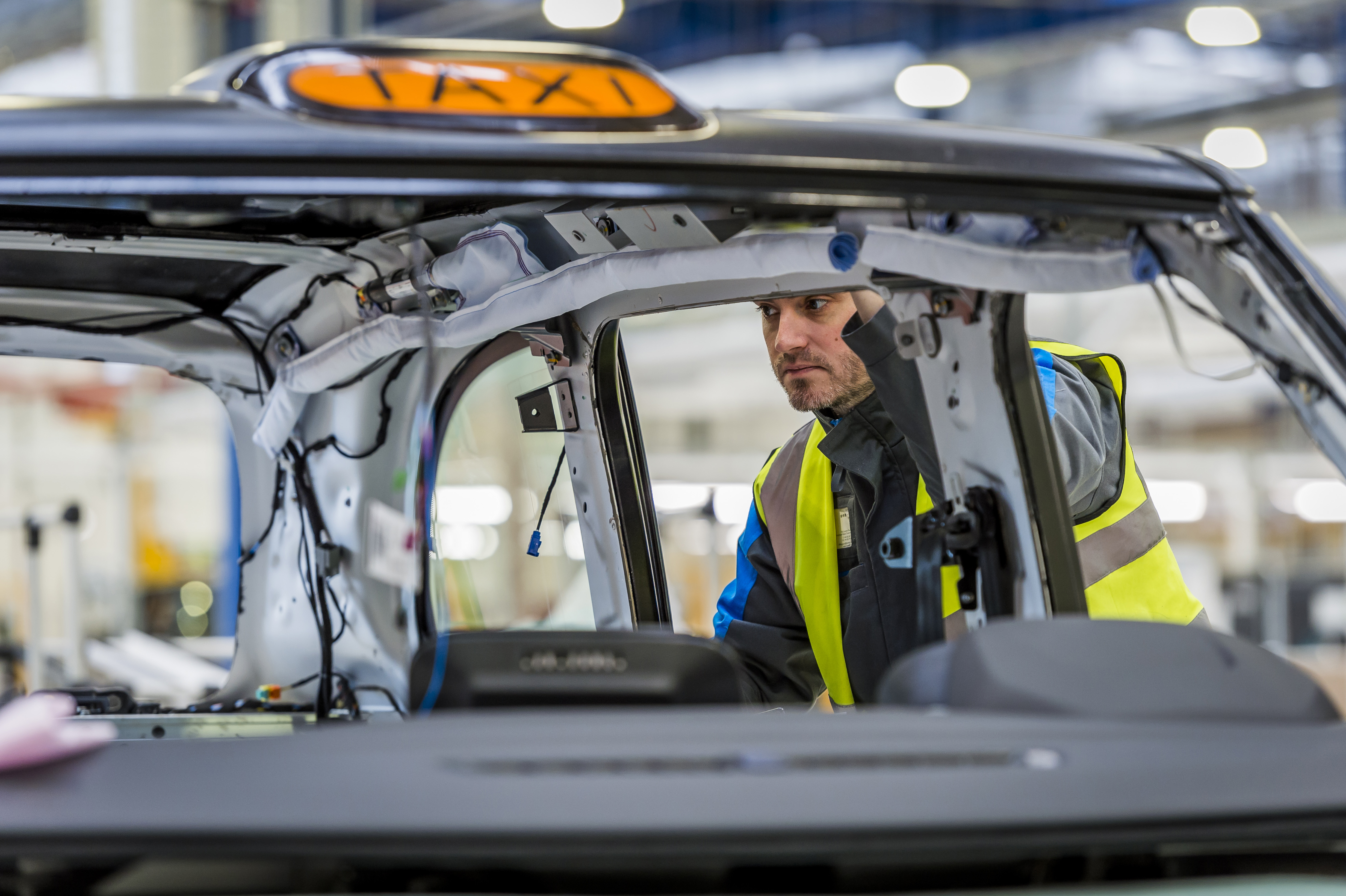
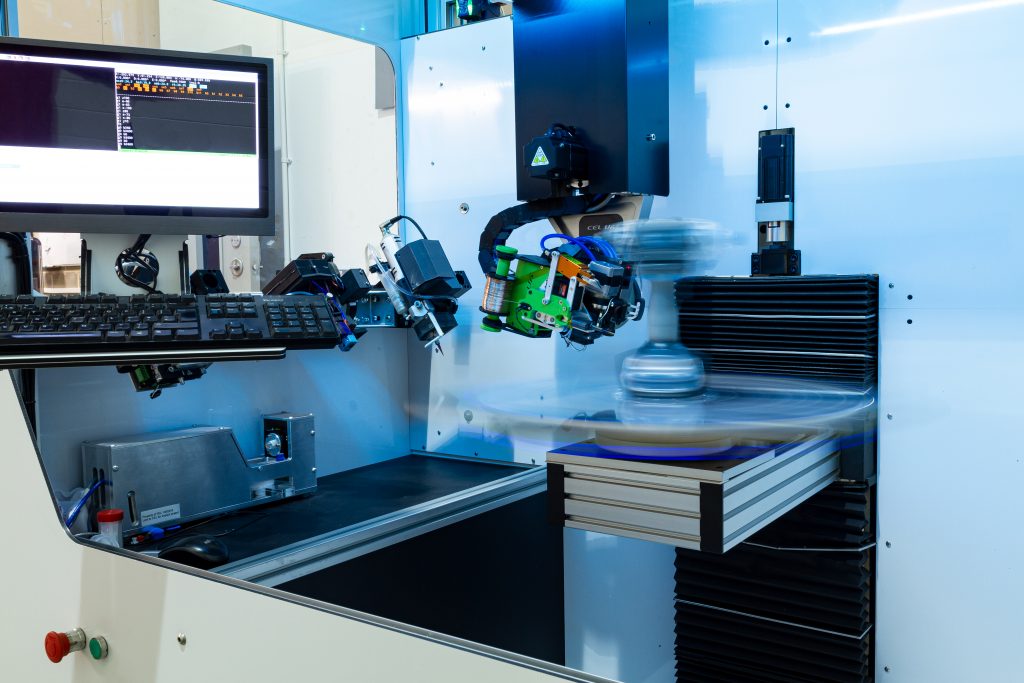



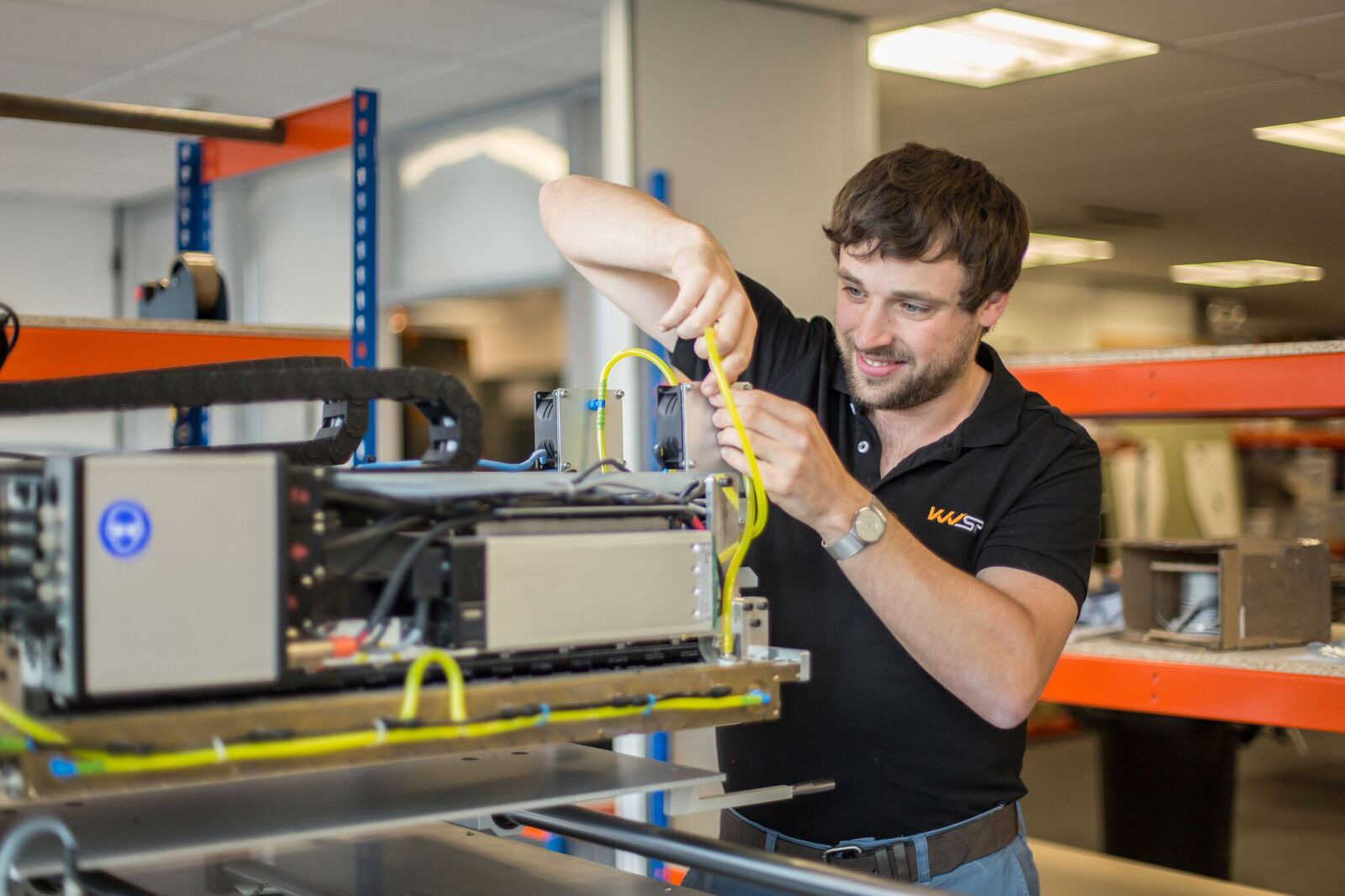 KWSP is a leader in precision manufacturing and is among Uniti’s technology partners
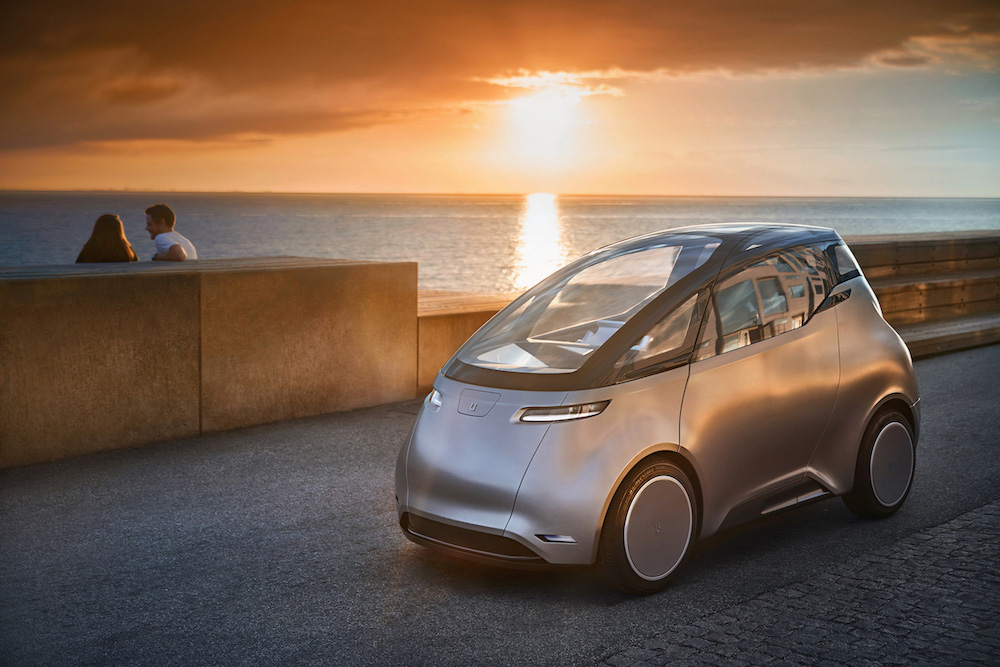 Uniti’s vehicles will be made using 3D printing and are meant to appeal to people keen on ecological living
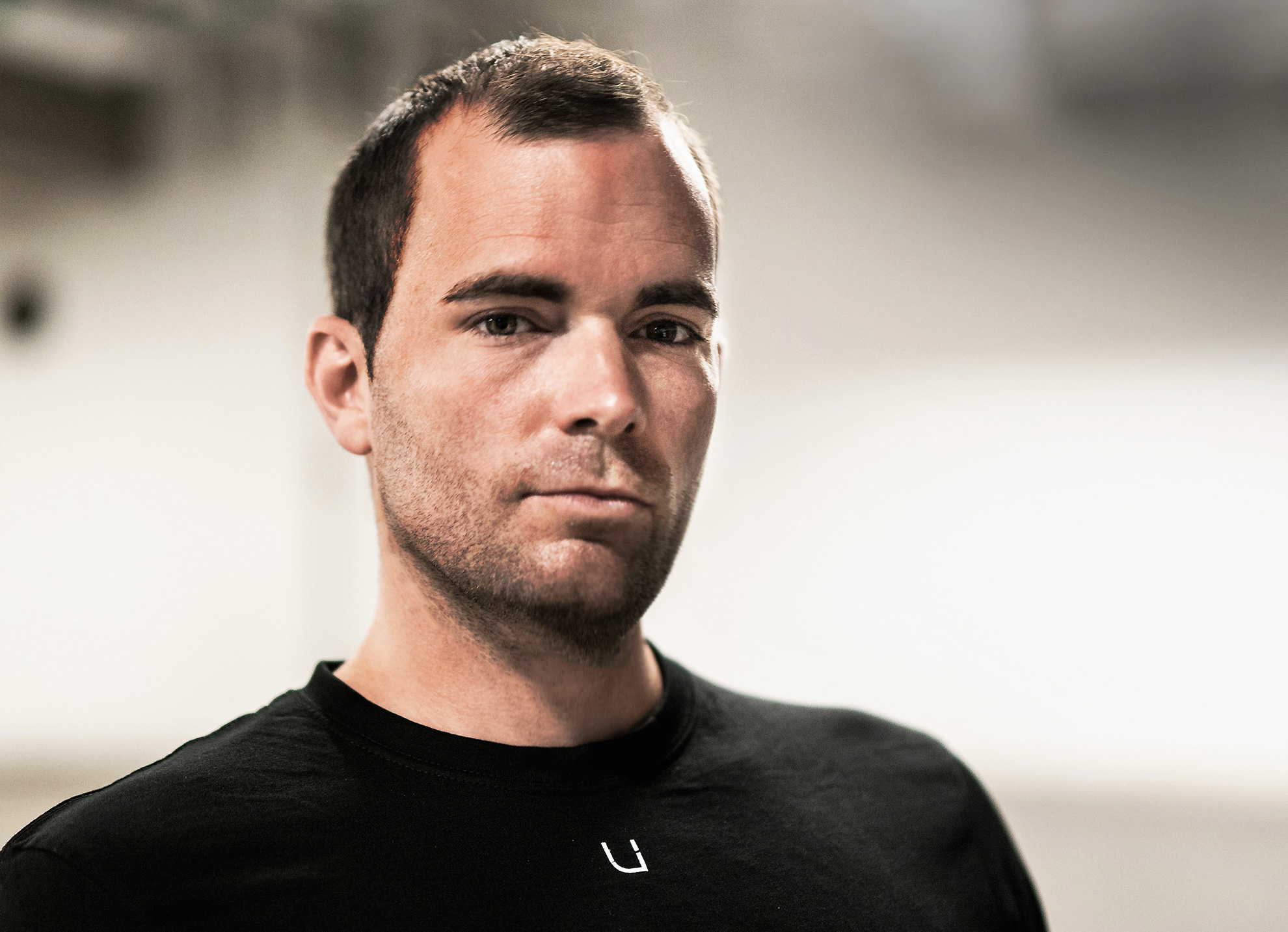 Lewis Horne, Uniti’s 34-year-old chief executive, was drawn to the UK by its speciality engineering suppliers
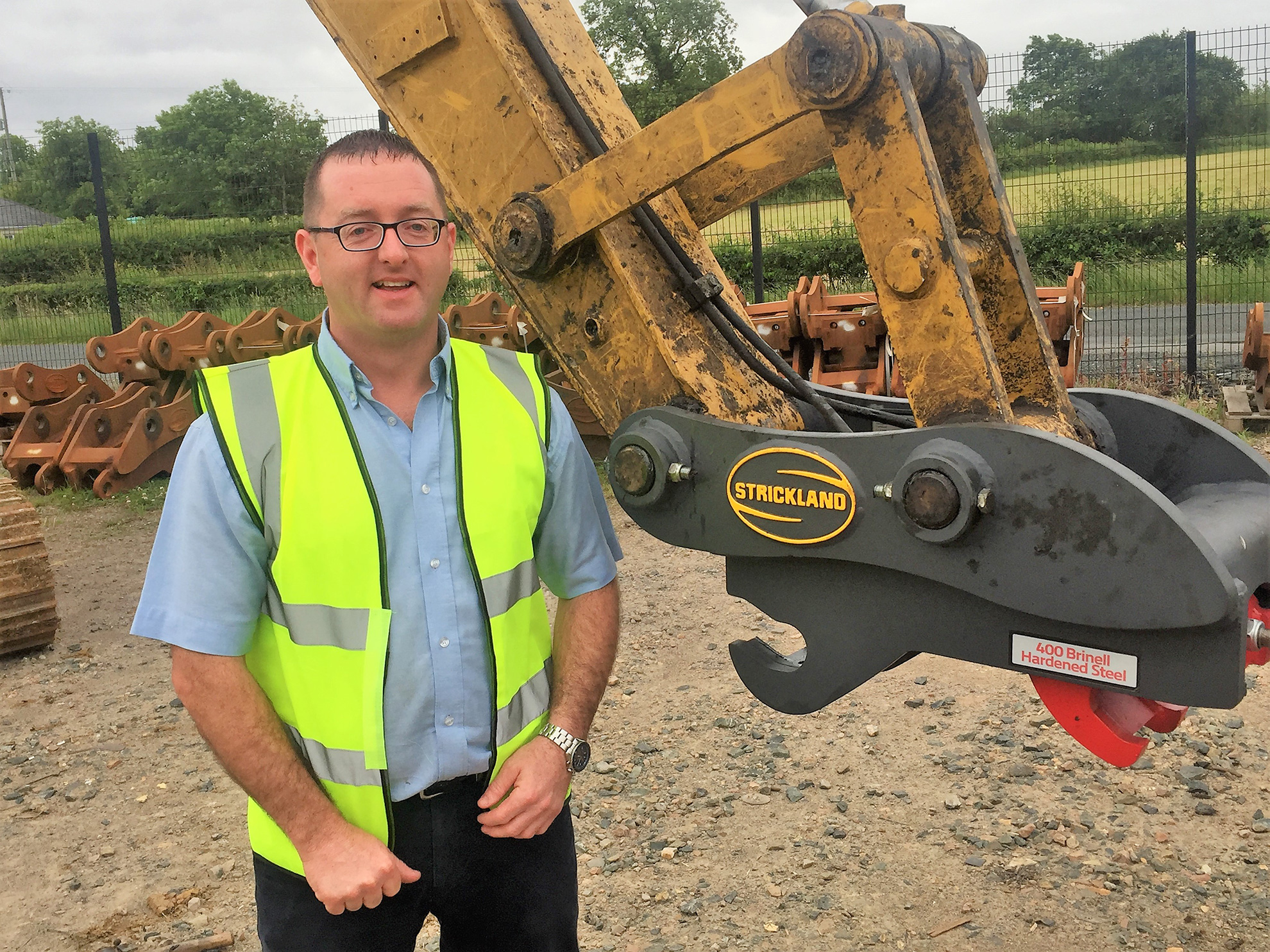 Brexit is a “mess” says Connor McGuckin of Strickland
 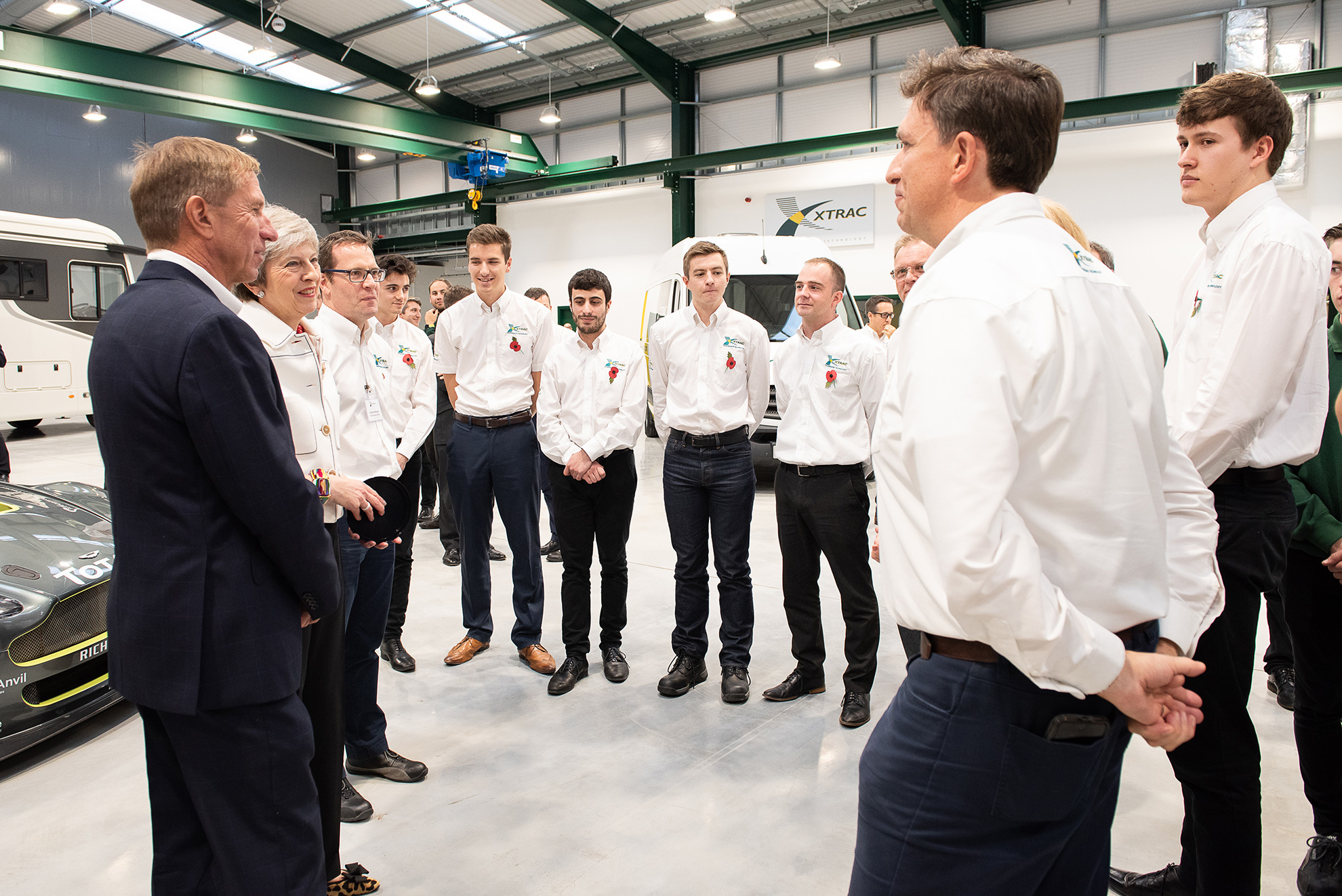 Ex-prime minister Theresa May found time during Brexit discussions to visit Xtrac’s expanding factory in Berkshire
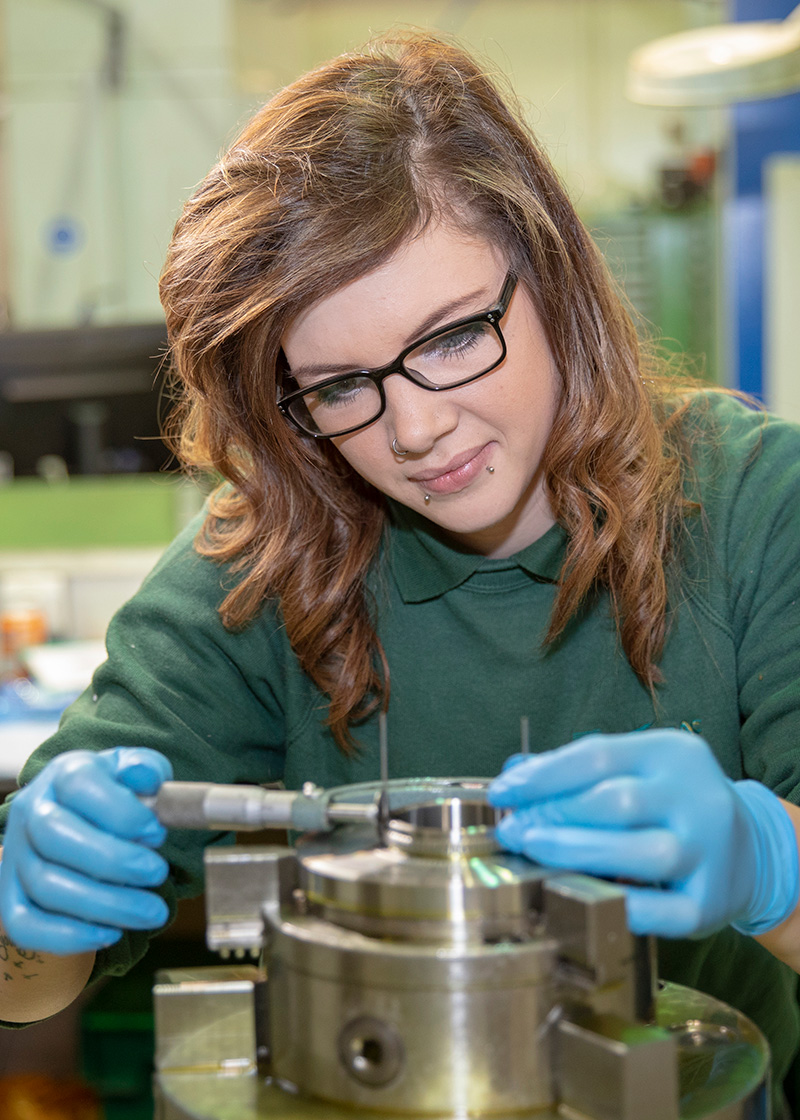 The specialised automotive maker is gearing up for growth by recruiting more apprentices including Chloe Noble who joined in 2018
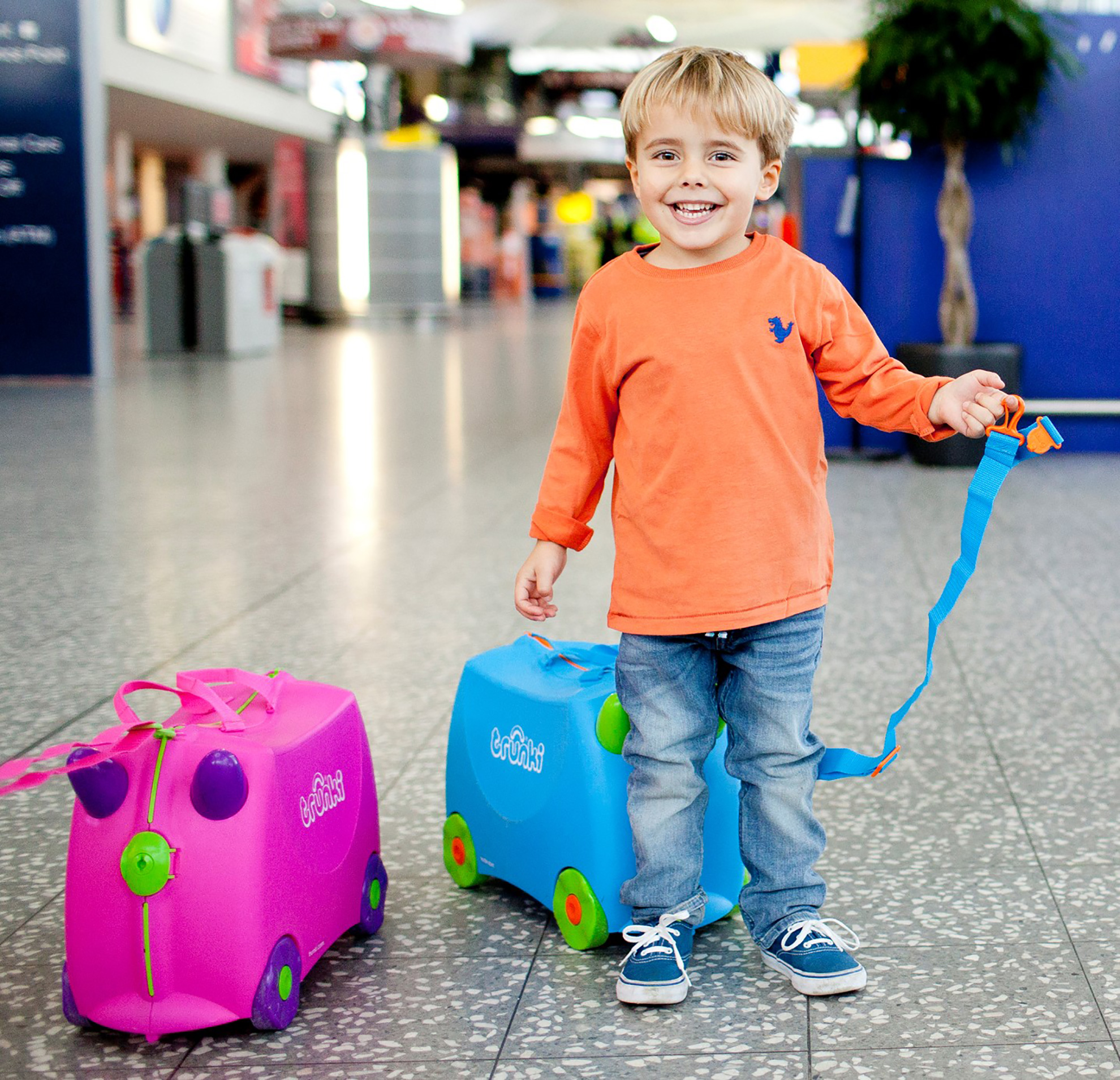 Trunki’s plastic suitcases for children have become a feature at many airports
-,with-gocart.jpg) Racing karts made from 3D-printed parts are at the centre of programmes organised by the Blair Project, supported by Create Education
Racing karts made from 3D-printed parts are at the centre of programmes organised by the Blair Project, supported by Create Education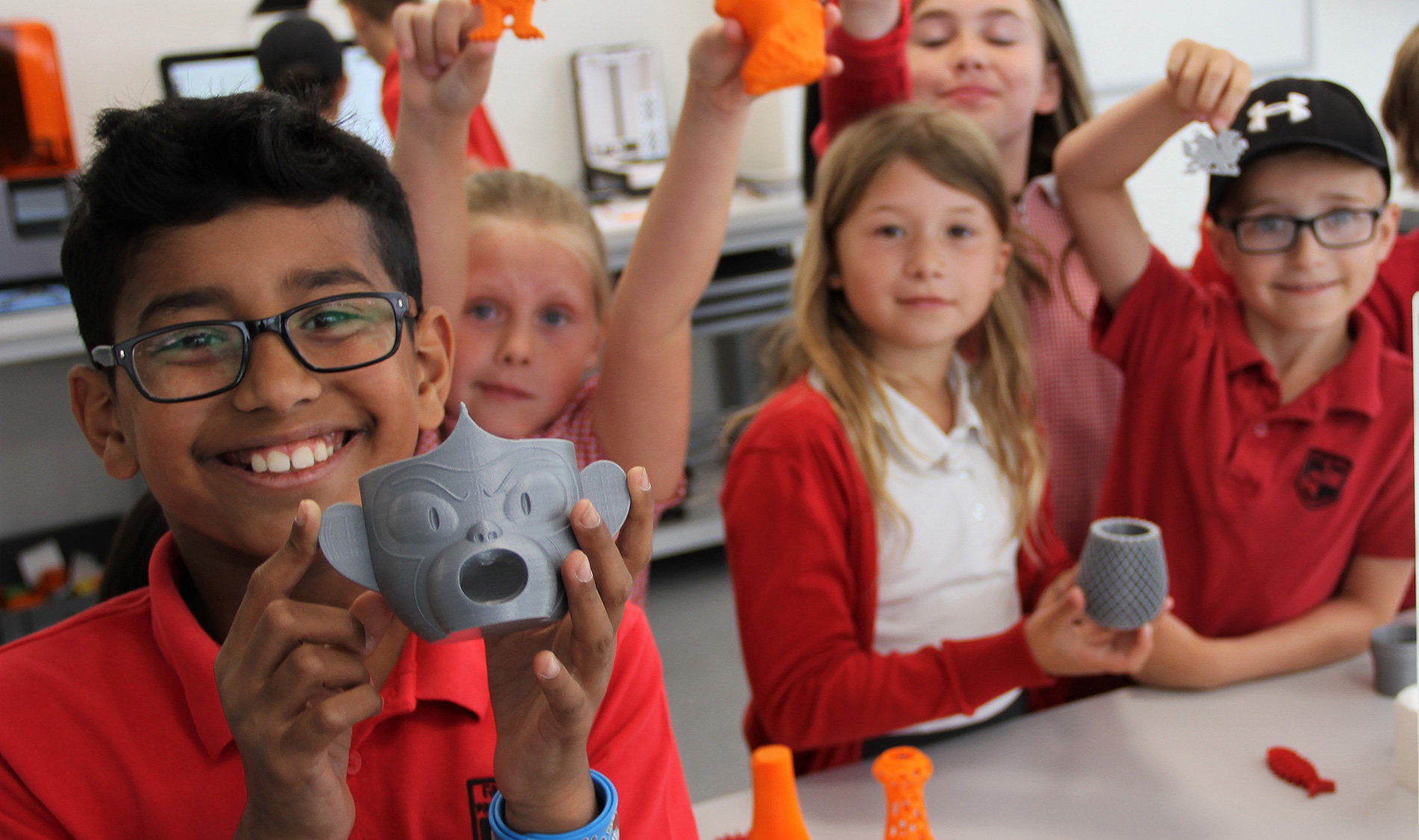 Children learn about 3D printing at Renishaw’s education centre in Miskin, south Wales
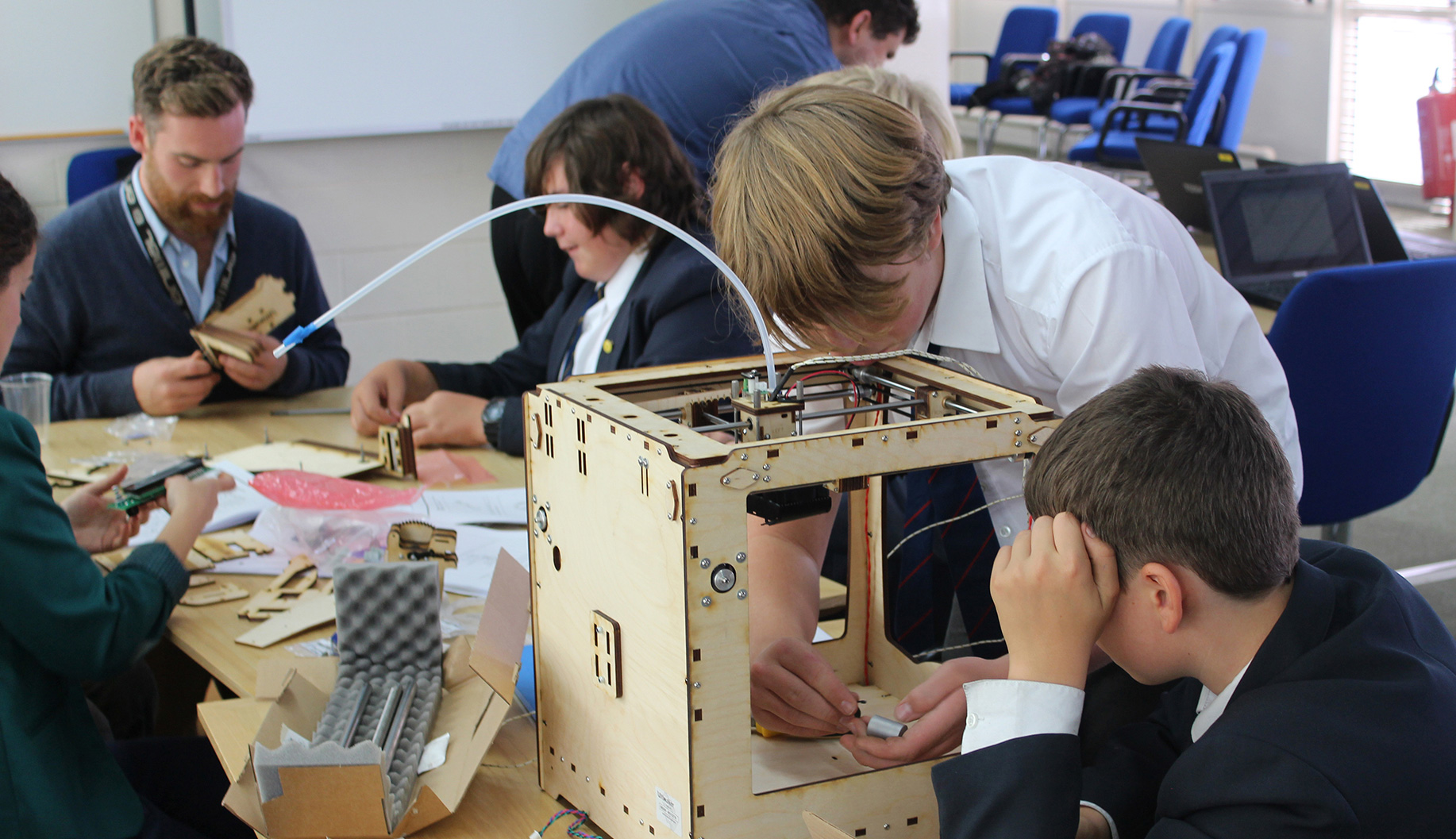 Small desktop machines for schools give young people practical experience of modern design and manufacturing
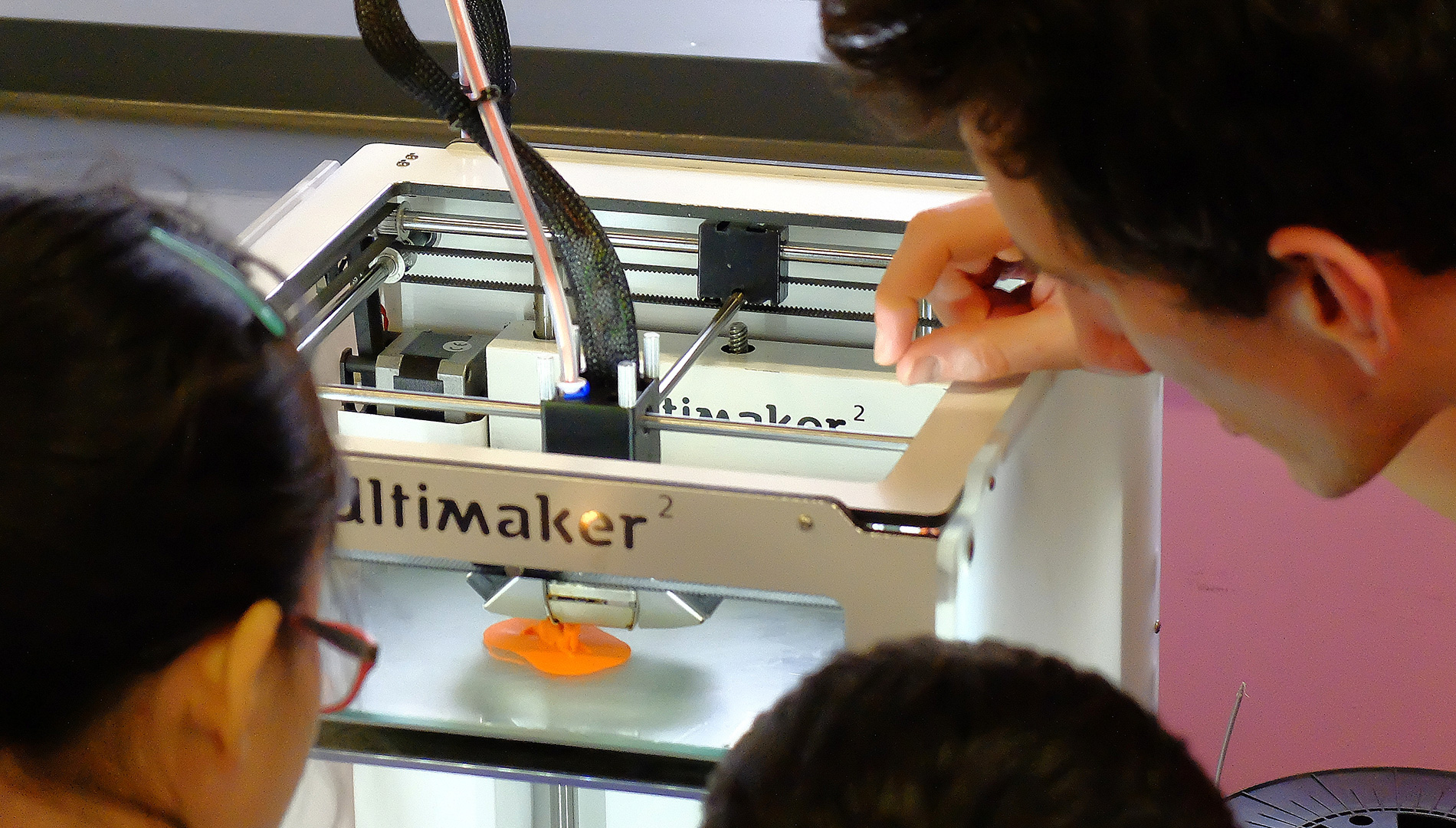 Additive manufacturing may help tutor tomorrow’s engineers
Reshoring: New UK plant preserves advantages for food packaging maker
Britain’s European Union exit could make it harder for UK-based businesses to import products from the rest of Europe, should onerous customs restrictions kick in.
To ease such difficulties, some companies have said they will add to their UK manufacturing operations through “reshoring” – and this is the path adopted by Aegg, a maker of plastic packaging for the food industry which is starting production in 2019 at a new plant in in Eye, Suffolk.
This is the first time Aegg has had its own factory in the UK. It has had its products made in Britain before, but by contractors.
The £2.1m investment will lead to a “significant” rise in the amount of Aegg’s products made in the UK, the company says. At present, Aegg’s packaging items are produced in several factories worldwide, mostly run by other manufacturers.
Jamie Gorman, managing director, says the new unit “will allow Aegg to better serve customers who would otherwise be adversely affected [by supply chain disruptions] …. in the aftermath of Brexit”.
It will also help meet expanding UK demand for the company’s plastic food pots and bowls, and give the company more opportunity to invest in new products. Gorman believes Aegg will have more leeway to introduce novel ideas into its manufacturing – such as through new designs or plastics tooling – if it has its complete control.
Aegg has just a handful of employees at the Eye plant but says this should rise to about 55 during 2019/20 as production ramps up.