BAE Systems, the defence company which is among the UK’s biggest manufacturers, has appointed a 23-year-old engineer as “entrepreneur in residence” to help promote a drive to boost collaboration and innovation.
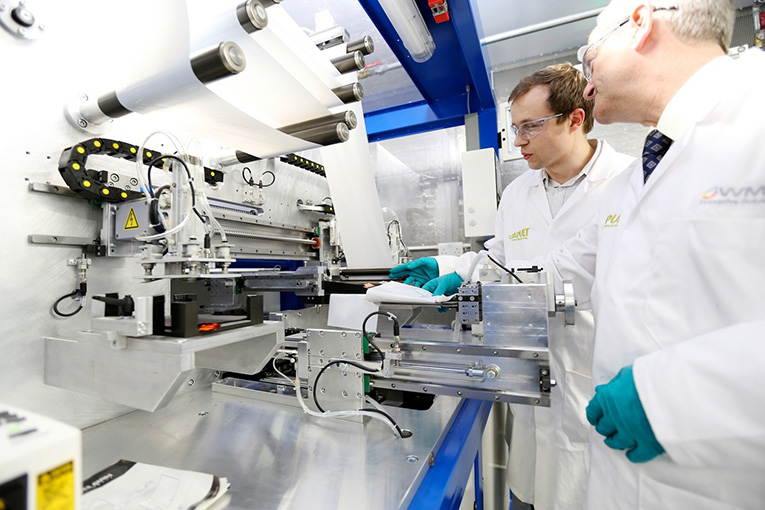
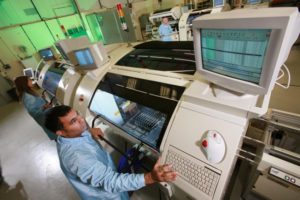
George Edwards is charged with encouraging other engineers in the business – which makes military hardware from submarines and missiles to warships and jet fighters – to be more open to new ideas from the likes of Microsoft and Amazon as well as small start-ups. The photo above shows the inside of BAE’s submarine factory in Barrow, Cumbria.

While Edwards is just one among the 22,000 engineers and technical staff who work for BAE in Britain, the move indicates how even in big and conservatively managed businesses intriguing new opportunities can open for young people. Made Here Now aims to highlight such possibilities.
A key attraction to BAE of Edwards – and which marks him out from the many young graduates and apprentices in the rest of the business – is that he started his own technology enterprise when he was 17 and still at school. Edwards runs the eight-person Make Sense for roughly half the working week, with the rest spent at BAE.
BAE says it hopes that Edwards’ experience at the start-up can bring an “outsider’s perspective” to developing technical ideas. Edwards says: “I am looking…[at external businesses]…that may have great technology that we [BAE] can use. We could form a link with such companies through partnerships or making an investment.
“My role…entails first identifying businesses where we could form these sorts of ventures and then developing ideas for how the partnership could work.”
Edwards’ appointment has emerged as BAE comes under pressure to make the most of its wide range of technologies and to become more cost-effective in using them in work for its mainly government-owned customers. Defence budgets globally are being squeezed as part of spending constraints.
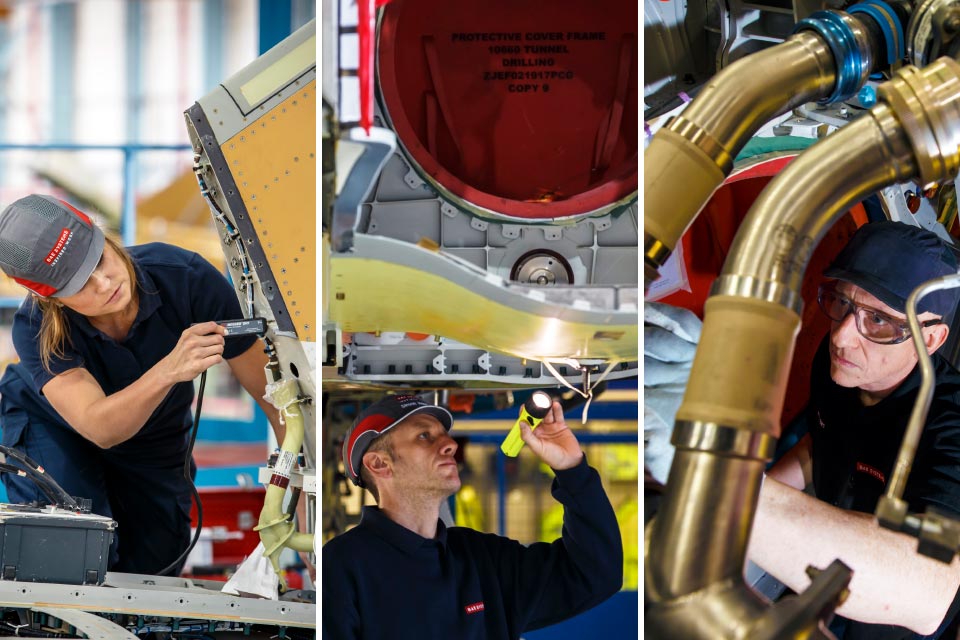
To help in its technology effort, BAE is a huge provider of engineers and technical staff. In 2018 BAE recruited roughly 500 apprentices and 300 graduates. It has some 2,000 apprentices and 500 graduates in training in the UK – where it employs just over 34,000 people in all disciplines, comprising about 40 per cent of its global workforce.
Nick Cunningham of Agency Partners, an investment research group specialising in aerospace and defence, says that over the next few years BAE is expected to boost its spending on new technologies to give itself more of a competitive edge.
The spending is likely to come in disciplines such as “stealth” systems (hardware and software to make military equipment invisible to radar), autonomous aircraft, artificial intelligence and cybersecurity. In all these areas, BAE might find it hard to create new ideas purely with its own resources.
As a result, says Cunningham, bringing in an outsider such as Edwards “could be one part of the effort to help the company to take on new thinking and move ahead of rivals”.
The appointment has been orchestrated by Nigel Whitehead, a long-serving BAE executive who at the start of 2018 started as the company’s first chief technology officer. Whitehead says: “Technology and innovation sit at the heart of our business…attracting and developing diverse talent is vitally important to encourage new and innovative ways of working and embrace disruptive and emerging technologies.”
Whitehead’s effort to promote innovation must fit in with BAE’s generally conservative approach. Defence companies are often reluctant to collaborate on technology with non-military businesses on secrecy grounds, as well as special factors related to equipment reliability.
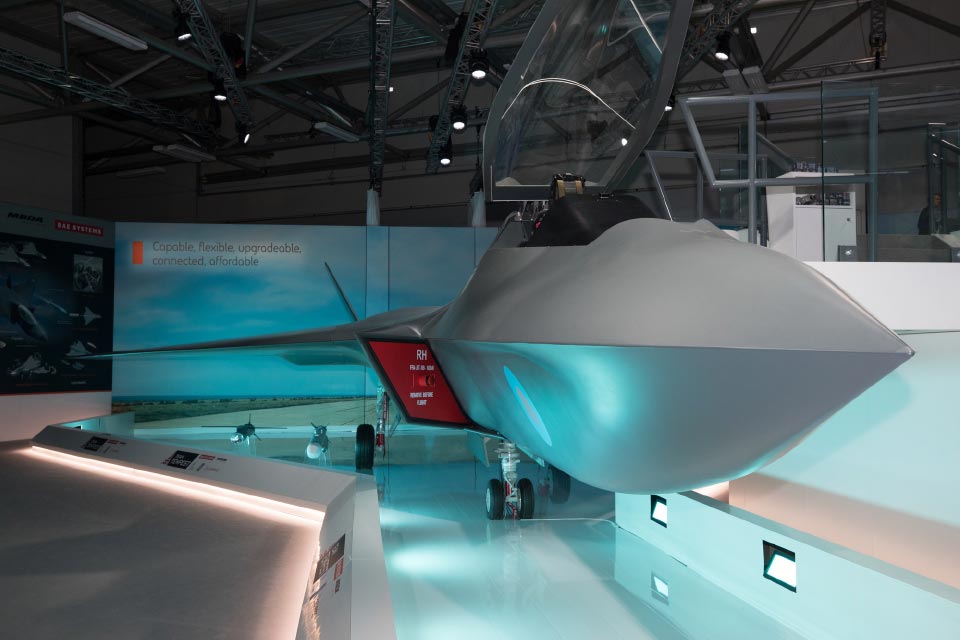
One of the biggest projects BAE has underway is an advanced combat aircraft called Tempest, which would be flown by a pilot or operate autonomously as a sophisticated drone. The vehicle – which could cost as much as £2bn to bring to production and see service in the 2030s – would use new ideas from novel structural materials to “smart” weapons guided by artificial intelligence.
Edwards is working for BAE for three days a week, as part of a 30-strong team engaged in “engineering product management” reporting to Whitehead. The rest of the time he is at Make Sense where he is chief executive.
Make Sense (formerly Gas Sense) concentrates on collecting and analysing data from manufacturing operations and linking the data to the IT systems, for instance, to help connect manufacturing operations with sales and distribution as part of the “internet of things”. Its clients include several big consumer goods makers, such as the US cosmetics group Coty.
According to Nicole Humphrey, founder of Direct Talent Source, a recruitment firm specialising in engineering, many technology businesses are more interested in taking on people such as Edwards with a background that “might not fit into their traditional job profiles” to bring in fresh ideas and facilitate innovation.
Discussing BAE, Edwards says: “Even with some of the world’s leading engineers and technologists within the business, there’s always opportunity to see what other innovative technology companies out there are developing that might be of help. For the world’s pioneering tech leaders you have to look to companies such as Google, Microsoft and Amazon. These sorts of companies are a key source of innovation and it’s important for us to look to the outside world to find new ideas.”
Part of Edwards’ career path involved a decision while still at school not to go to university. “I knew if I went to university, I’d find it very difficult to run my business as well,” Edwards says. “I love technology and I love business and I love manufacturing. So I decided to concentrate on this.”
Edwards had started Make Sense on the back of ideas while studying design and technology at King’s School, Canterbury, a public boarding school. He says he was “enormously fortunate” to be at a top-rated school with the money to pay for necessary equipment and teachers. Graham Swindley, who taught Edwards, says that at a young age he showed “enthusiasm for solutions that worked and dogged determination to make them work”.
On the wider effort to foster more of an interest in technology and engineering among school children, Edwards says: “I think an enormous amount has been achieved in the past five years in terms of promoting engineering within schools, through companies’ own initiatives…and [government] programmes. People talk a lot more about engineering and manufacturing than they used to which shows that some of the promotional efforts are beginning to take effect.”
(The article appeared in Made Here Now in 2018.)


























Experts puzzle over university data
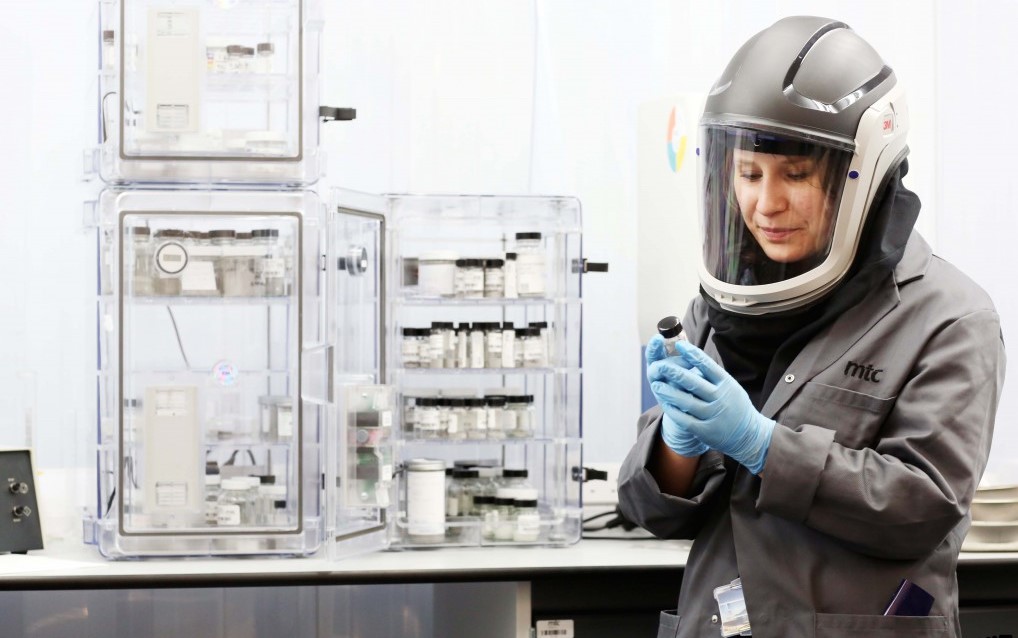
Dick Elsy, chief executive of the High-Value Manufacturing Catapult, has plenty of reasons to be interested in the numbers of engineering students. He runs one of Britain’s biggest research and development organisations, working with industry across seven centres in fields from new automation techniques to advanced materials.
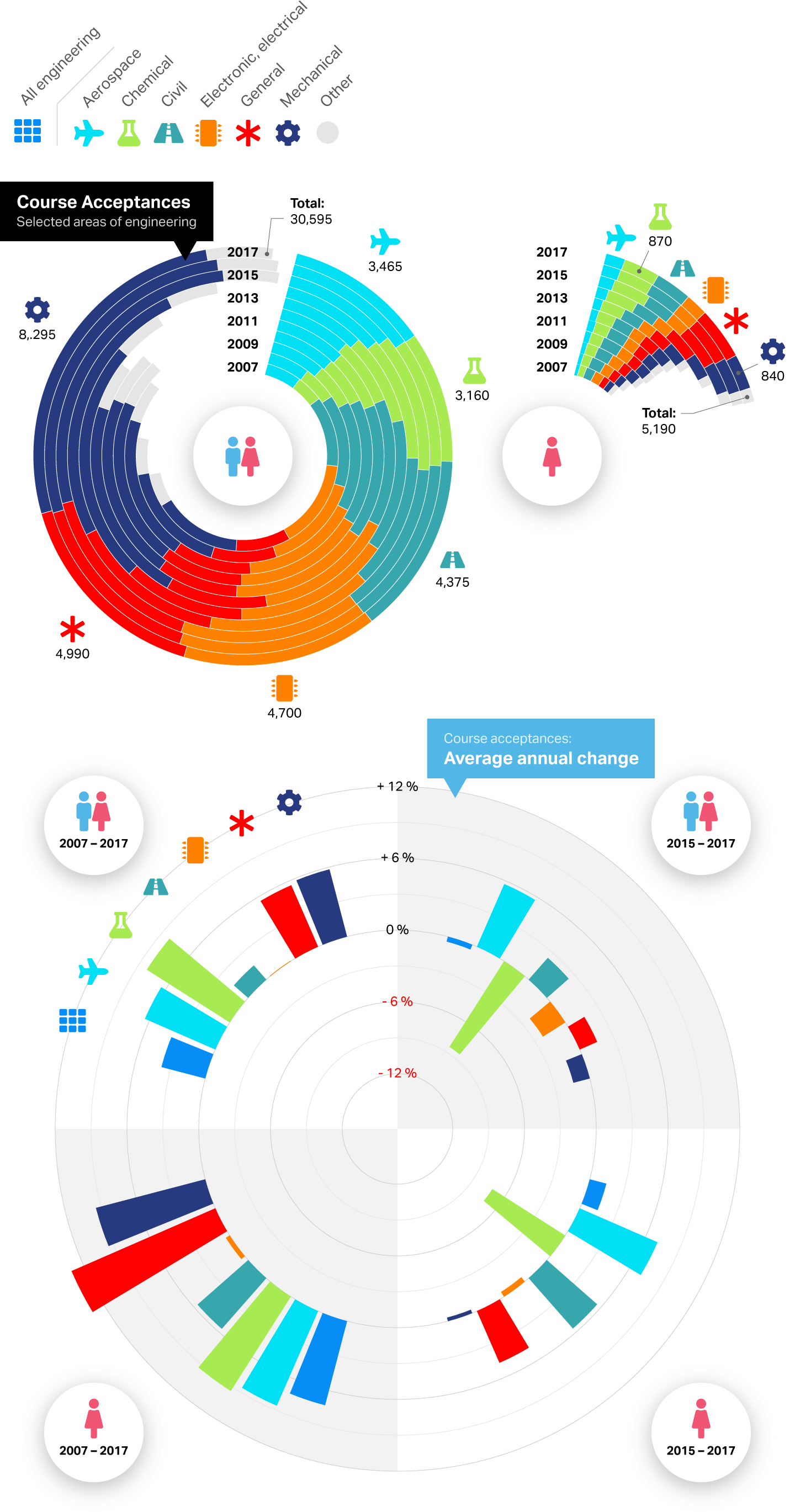
Elsy’s organisation employs more than 2,000 people, most of them with top-flight qualifications in engineering and related field. He is concerned by Made Here Now’s analysis showing a drop in the numbers going to UK universities to study engineering, after several years of steady increases.
While he says it may be a “little early” to reach conclusions, he adds that if the “reductions…since 2015 were to persist, that would be a matter of severe concern.” Elsy points to industry surveys showing recruitment of engineering and technical staff with right skills was a barrier to business.
“If the number of engineering graduates shrinks further, that barrier can only get higher. In pretty much every conversation I have about the future of manufacturing, access to skilled recruits comes out as the principal concern for UK businesses.”
Andrew Churchill, executive chairman of JJ Churchill, a family-owned manufacturer of high-tech turbine blades based near Leicester, is someone else monitoring the UK graduate field for the people he needs to help run his expanding business. He says it is “deeply saddening” that the number of people accepted for UK undergraduate engineering courses declined by an average 0.4% a year between 2015 and 2017, against a trend from 2007-17 showing an average increase of 3.8 per cent a year.
“I remain convinced that part of the story in this apparent decline is a lack of understanding as to where an engineering career can lead you and what it involves, as opposed to a simple decline in interest once those career opportunities have been understood.”
One seldom acknowledged reason for the drop in numbers, Churchill says, could be shortages of design and technology teachers in schools, leading to fewer schoolchildren studying a subject that might spark their interest in an engineering course at university.
Bhavina Bharkhada, skills policy adviser at the EEF manufacturing organisation, says another factor may be increased interest by young people in vocational routes into engineering, including apprenticeships. Demand for these has shown a broad increase in recent years.
“Despite the significant challenges that the introduction of the apprenticeship levy [a set of charges triggered by new legislation], apprenticeship starts in manufacturing and technology have held up,” Bharkhada says. Others point to variations between universities in the numbers of engineering students being taken in, with some such as Southampton and Cambridge expanding their provision, while others have cut back. The cuts in places could result both from the higher costs of running engineering courses compared to many other subjects and to reduce demand among young people.
The UCAS numbers on which Made Here Now’s analysis is based show that in 2017 78 per cent of people accepted for engineering courses at university had their homes in the UK, with 22 per cent coming from overseas. Over the past decade the proportion of “home-grown” students has increased, from 69 per cent in 2007. Acceptances of students from both the UK and other countries have shown a marked slow-down in the past two years, indicating similar trends are affecting both groups.
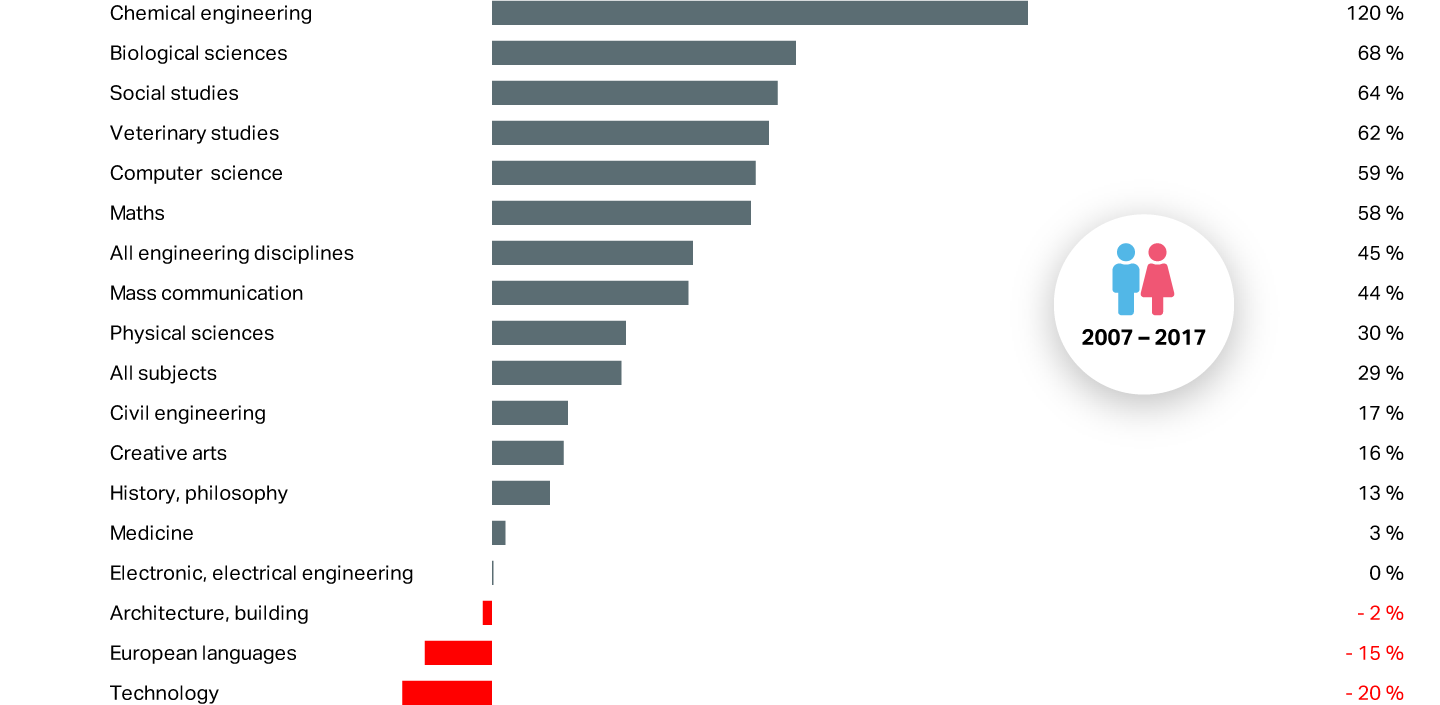
The overall decline in engineering acceptances – counting both UK and overseas students – coincides with a broader drop in the proportion of young people opting to go to university. This is a change related to higher tuition fees, worries about debt and the availability of jobs for graduates, while efforts to attract more young people into vocational training may also be playing a part. Across all subjects monitored by UCAS growth in course acceptances slowed to just 0.2 per cent a year between 2015 and 2017, compared with the 2.6 per cent average annual growth rate between 2007 and 2015.
A worrying sign, however, for many in the engineering community is that the decline in engineering has been deeper than for many other subjects. In architecture, for instance, the numbers accepted over the past two years have increased by an average of 4.7 per cent, compared with an average decline for new architecture students of 0.2 per cent a year over the full 2007-17 period.
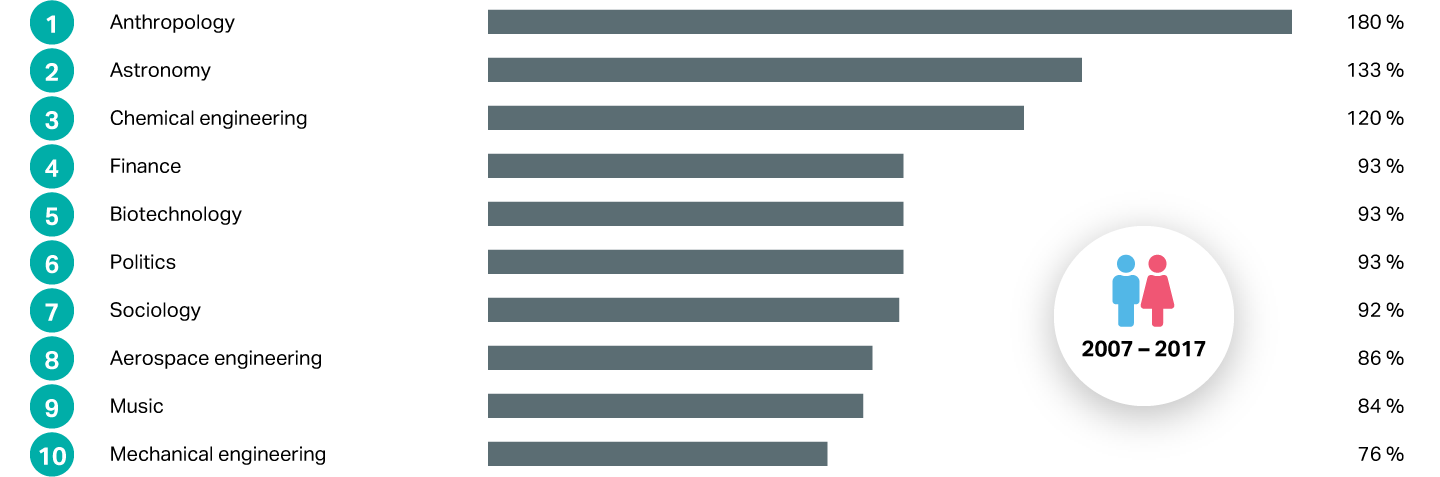
Engineering has grown hugely in popularity over the full 2007-17 period, with acceptances for UK university undergraduate courses rising on average by 3.8 per cent a year. This equates to an overall rise of 45 per cent – from 21,100 entrants in 2007 to 30,600 in 2017 – and shows that over that period engineering increased in popularity much more quickly than the average for all degree subjects. Across the entire university undergraduate intake, acceptances rose 29 per cent from 413,425 in 2007 to 533,895 in 2017.
Other engineering-related disciplines show a similar weakening trend from 2015 onwards. Acceptances for physical sciences, technology, biological sciences, maths and computer sciences have all shown much weaker growth over the past two years compared with their longer-term performance.
Whatever lies behind the numbers – and most agree it will be hard to draw strong conclusions until a longer run of figures becomes available – the data reinforce the feeling that industry and education still have a long way to go to convince young people of the attractions of a career in an engineering related topic.
“The challenge is a cultural one,” argues Dick Elsy of the High Value Manufacturing Catapult. “It will take many years to change long-held preconceptions which attach a lower value to engineering and manufacturing. We have to keep going, get into schools and show the wider population what modern manufacturing really looks like. Making engineering and manufacturing an aspirational career must be the goal.”