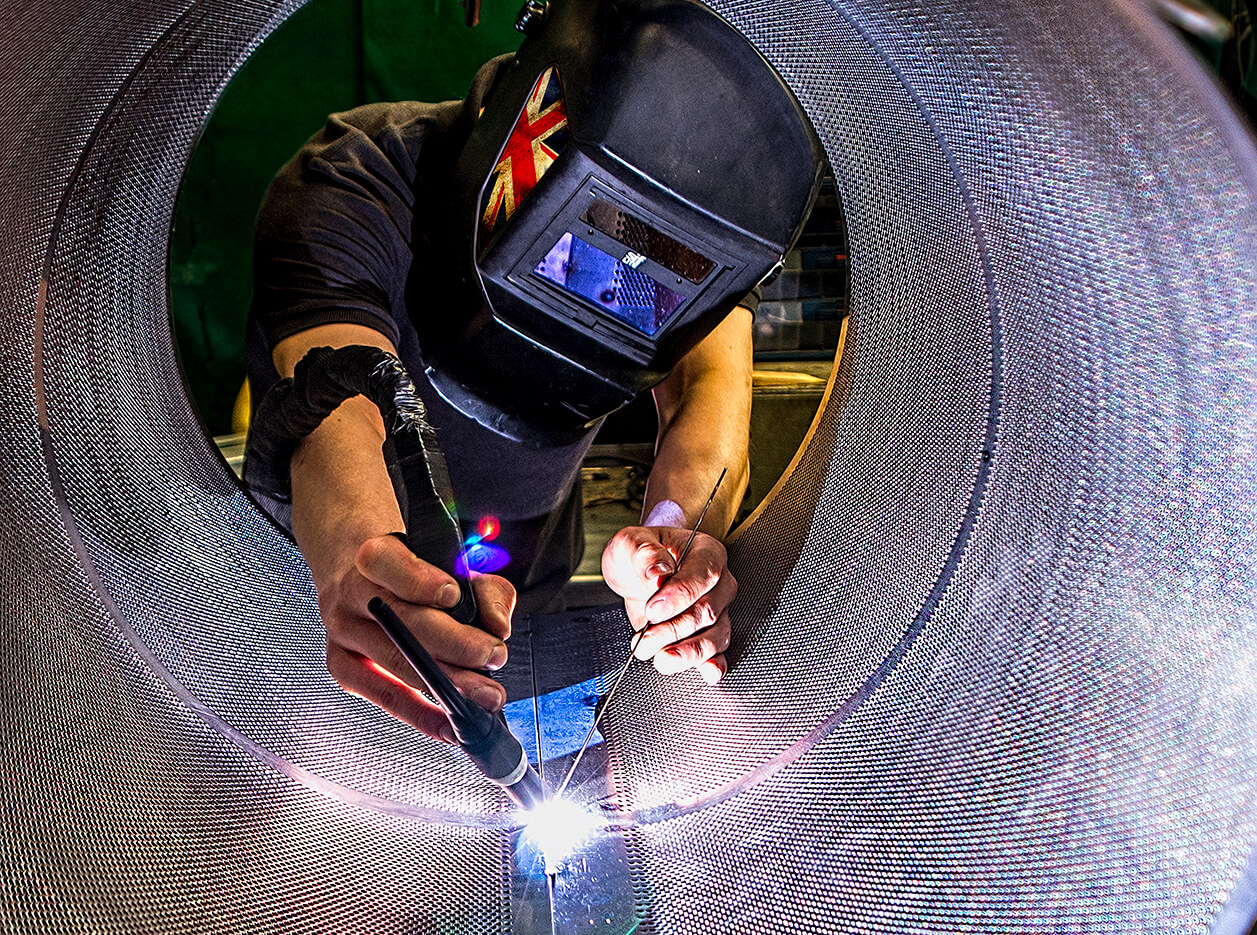
 Finding skilled people for technical jobs continues to be a big problem, according to many employers. Photo: Rob Watkins/ Croft Filters.
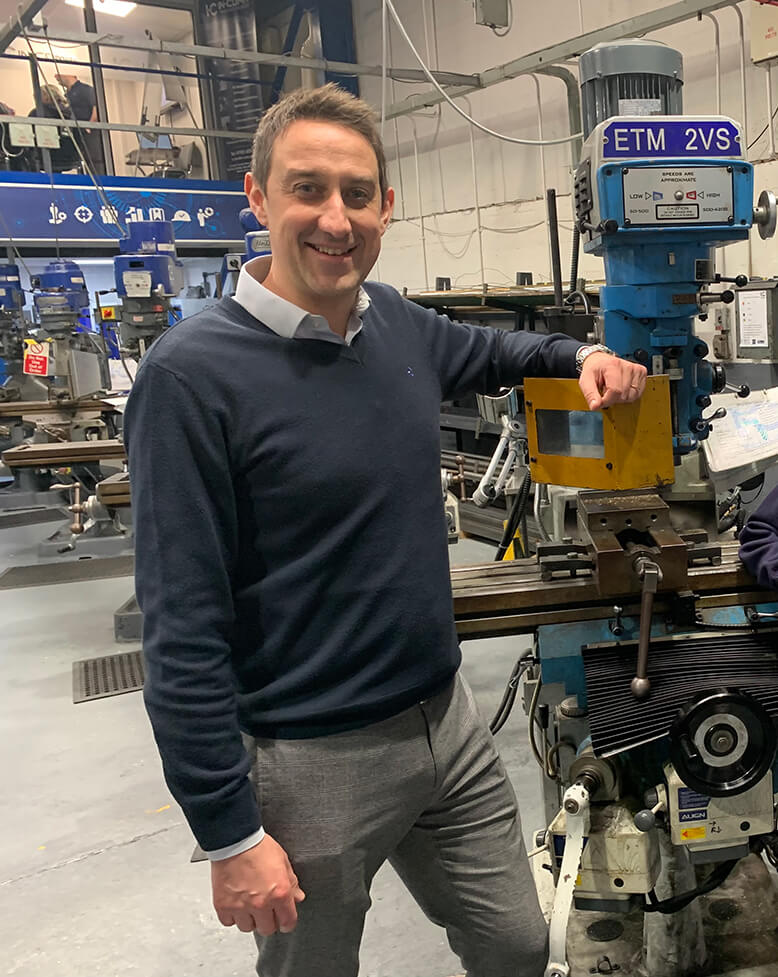 Forming long-term relationships with schools is a vital part of In-Comm’s work, says Gareth Jones, the company’s managing director.
“We spend about £250,000 a year [out of annual sales of just under £4m] on engagement – going to education establishments including schools and colleges and places such as sports clubs and religious institutions to discuss what we do. We talk to teachers, students and their parents. Teachers and parents are big influencers for young people. It’s essential to engage with them as well as the students.”
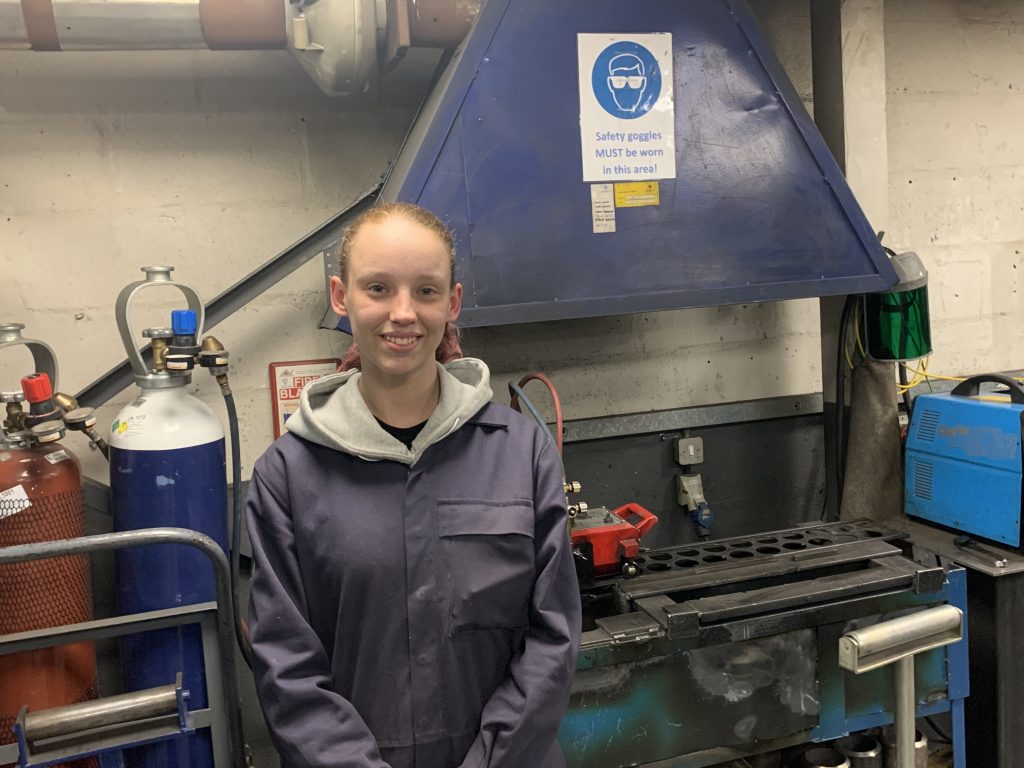
Stacey is among about 450 people – most of them young and from the Midlands – who have undertaken a technical apprenticeship at In-Comm during the past year. In addition, another 1,000 have received training from In-Comm to improve the skills of people already in work. The company has two main centres, Aldridge and Telford in Shropshire.
“The talent pool [in engineering and manufacturing] is much smaller than it used to be,” says Jones. “Employers continue to report they can’t find the technically qualified people they need. Change in technology and processes is also driving demand.”
As for linking up with young people and their influencers, Jones believes that building up relationships over a long period boosts the chances of success. One-off events – during which a student may become interested, only to run into difficulty arranging any follow-up – are not enough, he says. “We schedule repeat visits [to schools and other institutions] so that we provide a long-term connection.”
Through such contacts, In-Comm says in a typical year it has contacts with about 5,000 people of varying ages mainly in the area around Birmingham and Wolverhampton. As evidence that such efforts can pay off, Stacey says she learned about In-Comm after a company representative came to her school in Aldridge to talk about what it offered. “In-Comm seemed to provide the type of training and work experience I was looking for,” she recalls.
Stacey chose welding because she’d already gained some experience of it at school. At home, this know-how came in useful in her spare time. “I used to help my Dad repair bikes and cars,” she says. So far, her experience at In-Comm “has been great”.
Technical apprenticeships organised by In-Comm typically last about three years – a mix of theory and practical training, normally including time spent with an employer. In Stacey’s case, she works at Valen Fittings, a pipe manufacturer in Walsall that she hopes will provide the base for a sound start to a career.
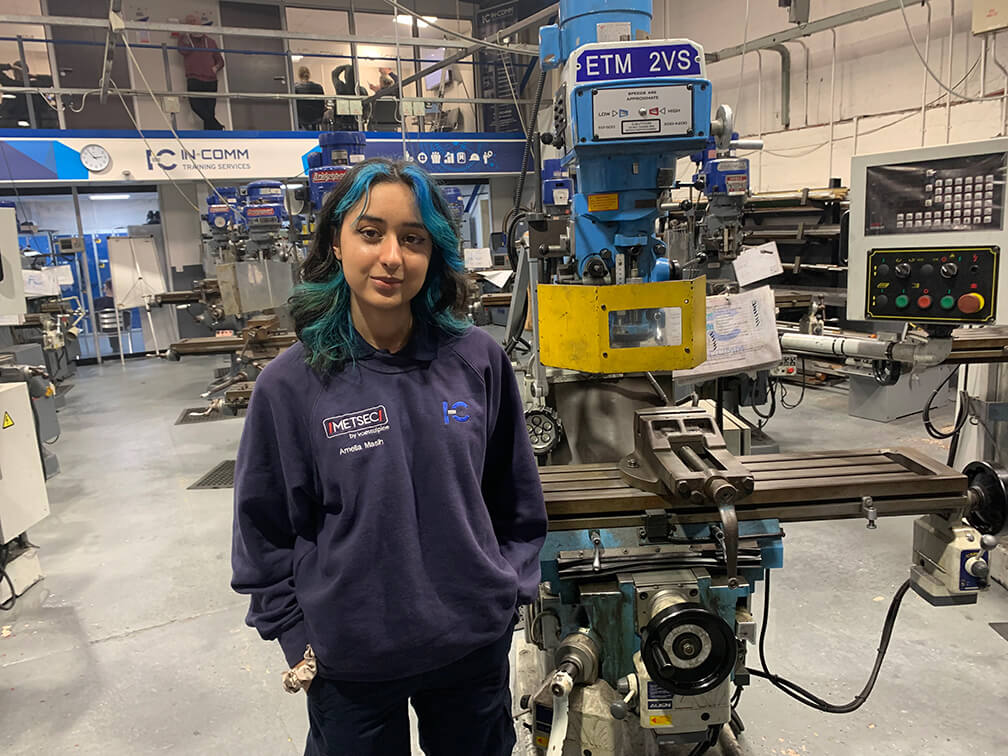 Amelia Masih reckons the engineering sector offers “a secure career and a lot of opportunities”.
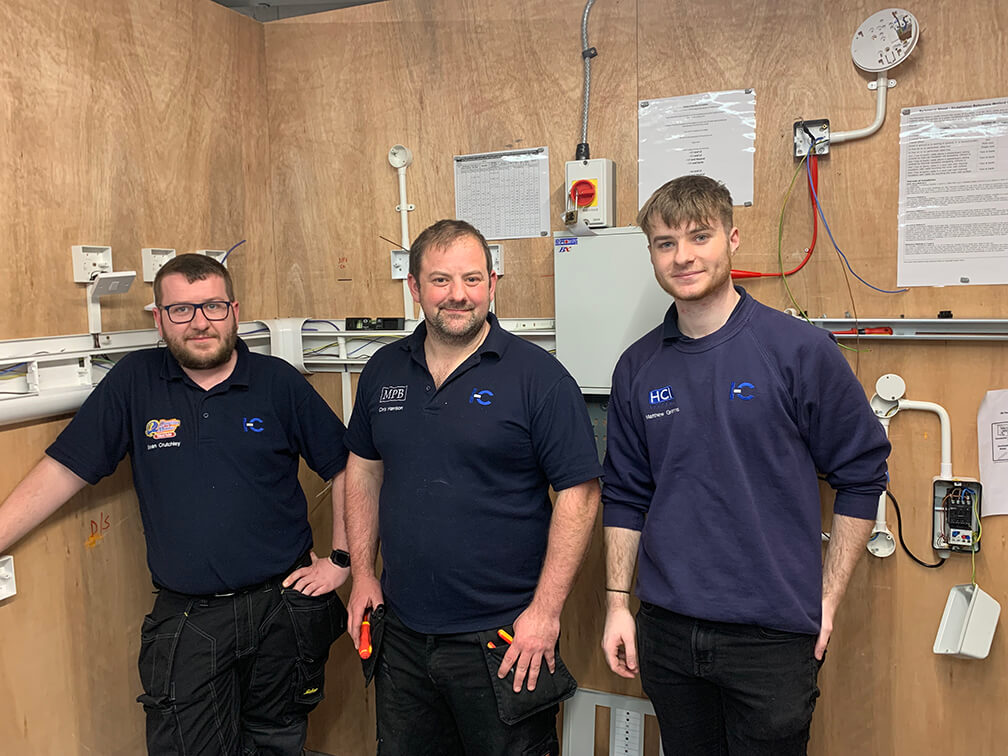 Three In-Comm apprentices (left to right): Sean Crutchley, Chris Harrison and Matthew Griffiths.
As for Jones, he says that people involved with technical skills need not only to work hard to address the challenges, but to be prepared to do this over a prolonged period. “Competence in this [manufacturing and engineering] sector is about combining knowledge and experience. It won’t happen overnight. This is a long-term issue – there is no quick fix.”
Industry partnership geared to “developing pride about what you can achieve”
Working closely with industry is a critical part of efforts to create a higher-skilled workforce, according to training provider In-Comm. The company maintains contacts with about 700 engineering-related businesses, mainly with factories and other sites in the Midlands, either to liaise on the training of individuals, or to provide consultancy on topics such as skills know-how or new factory processes.
While some of In-Comm’s collaborations are with large multinationals including Collins Aerospace of the US and India-owned carmaker JLR, one special partnership is with Birmingham-based Brandauer, a relatively small but highly regarded manufacturer specialising in metal parts for industries such as electrical goods.
With Brandauer, In-Comm has started an unusual venture aimed at increasing the number of people trained in tooling – a key technology linked to making the tools vital for industries such as precision metal stamping and plastic moulding, and one where the UK faces well-documented skills shortages.
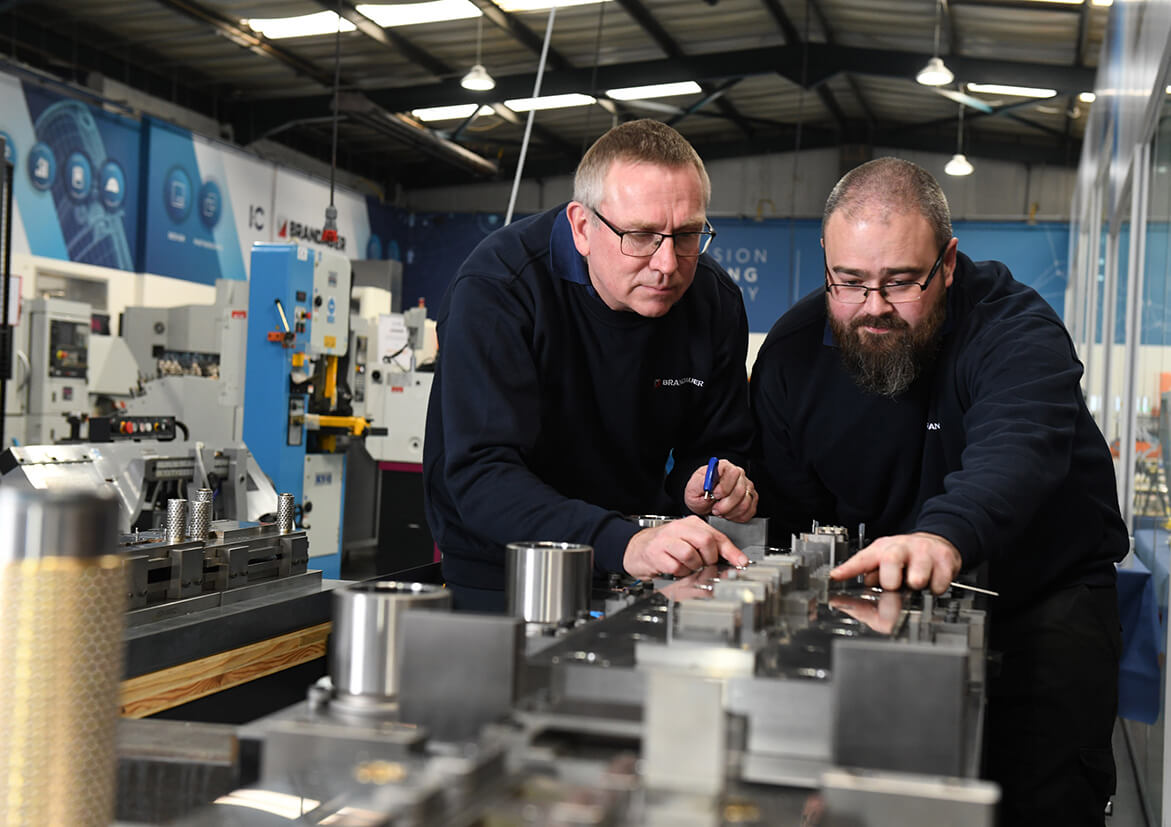 Mark Nicholls (left) and Trevor Francis are among the toolmakers at engineering firm Brandauer who are passing on their skills to young people.
In-Comm and Brandauer have between them spent £1m on new machines at In-Comm’s Aldridge site that will have a dual role – supplementing Brandauer’s current toolmaking capability at its main Birmingham base and organising training for a range of people, including Brandauer employees and those working at other manufacturers. The two partners hope in the first year to offer training places for 35 people – with the first cohort including some workers employed at JLR. Some of the trainees in the new operation may be new to toolmaking while others may be people already working in this discipline but who need to add new capabilities.
In-Comm also has a close links on training with companies including the UK subsidiaries of Ricoh and Epson, two big Japanese manufacturers with established operations in the Midlands, and the UK companies Engineering Technology Group and IMI.
The courses being offered in the Brandauer partnership on tool process design have been formulated in collaboration with the Confederation of British Metalforming, an industry body, while Hexagon, a big Swedish IT company specialising in measurement and design for manufacturers, has also contributed ideas to help with training.
Working at the Aldridge tooling facility is Trevor Francis, a 34-year-old Brandauer toolmaker who has been in this job since his teens and will play a part in training young people in the new operation. “It’s a great idea to have this facility here to help boost skills,” he says. “Toolmaking is a job where you work to high precision. You can develop a real sense of pride about what you can achieve.”
According to Rowan Crozier, Brandauer’s chief executive, the venture will enable his company to increase both its production of tools – which it believes is vital to its ability to win new orders – and the number of trained toolmakers available to companies. Brandauer now employs 15 people in toolmaking and over the next few years aims to add one or two a year if it can find the right people.
Alan Arthur, chief executive of the GTMA, a trade association specialising in tooling, praises the In-Comm/Brandauer scheme as “an imaginative approach” to training, and Howard Boswell of the Metals Council, an industry body, says it is needed in the light of what he says is a gradual return of toolmaking to the UK.
Boswell reckons this is happening because of several pressures including changes in the organisation of global supply chains and a diminished interest by some big manufacturers in “offshoring” production to countries such as China. “It’s likely we will see a renaissance in toolmaking in the UK in the next few years. This new venture will help drive it forward.”
The article first appeared in Made Here Now
